Artificial Intelligence in Education (AIEd) Symposium 2026
Artificial Intelligence in Education (AIEd) Symposium 2026 – Reimagining Education in the Age of Artificial Intelligence
As Artificial Intelligence reshapes the future of education, new opportunities and challenges emerge for students and educators alike.
In this symposium, our esteemed speakers will discuss the role and relevance of STEM and design education in the age of AI, reimagining every critical aspect of teaching and learning for a rapidly changing world.
Symposium schedule
| Time | Programme |
|---|---|
| 8.30AM | Registration and morning tea |
| 8.50AM | Opening address by Lee Lin Yee (MOE) |
| 9.00AM | Keynote address by Prof Rose Luckin (UCL) |
| 9.50AM | Coffee break |
| 10.10AM | Keynote address by Prof Yow Wei Quin (SUTD) |
| 11.00AM | Panel discussion |
| 11.45AM | Lunch break |
| 1.00PM | Prof Chen Wenli (NIE) |
| 1.45PM | Applying AIEd in practice at SUTD
1.45 PM – Dr Sumbul Khan |
| 3.00PM | Coffee break |
| 3.15PM | A/Prof Eric Chua (SIT) |
| 4.00PM | A/Prof Laura Wynter (SMU) |
| 4.45PM | Closing remarks |
| 5.00PM | End of Symposium |
Opening address and discussion panellist
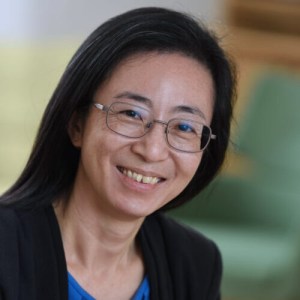
Divisional Director – Educational Technology
Ministry of Education (MOE), Singapore
Keynote speakers and discussion panellists

Professor Emerita, University College London
Founder and CEO, Educate Ventures Research
Keynote: When the machine can solve it: Human intelligence and the future of STEM higher education
In mathematics, computer science and engineering, AI now produces outputs that look like competence. It returns correct solutions, working code and plausible proofs in seconds. This is where the central risk of AI for education is sharpest. The visible output, the performance, is easily mistaken for the invisible capability, the learning. A correct answer is not evidence of understanding, and the gap between the two is widest in the disciplines where the answer is most checkable. These are also the disciplines where students are adopting AI fastest.
This keynote suggests that the principal risk of AI is misjudged. The danger is not that machines become too capable. It is that we undervalue ourselves and allow performance gains to stand in for learning gains. For STEM universities, the opportunity is to design education that develops what AI cannot: accurate judgement of one’s own knowledge, the disposition to question a confident output, and the metacognitive capacity to know when one has understood something and when one has not.
Prof Luckin sets out what this means for the curriculum, assessment and teaching of STEM disciplines, and why the institutions that learn fast and act more slowly will be the ones best placed to prepare their graduates for an AI world: graduates whose value lies in the judgement, reasoning and self-knowledge that no machine supplies.
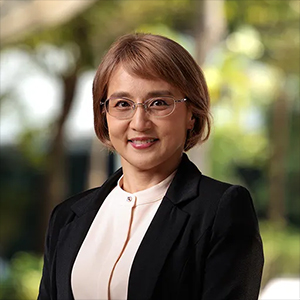
Head of Cluster (HASS), Programme Director (DAI)
Professor of Psychology, Singapore University of Technology and Design (SUTD)
Keynote: When AI succeeds at the wrong thing: The social mind and learning in an AI world
Human learning is a social act and has always been built on what others know. We learn from people around us, from the accumulated knowledge of those who came before, and from the texts, ideas, and insights that human intelligence has produced across generations. At the heart of all of this is a capacity the human mind develops from infancy: deciding whose knowledge is worth trusting, and why. That capacity shapes everything from how a child learns language to how a student navigates a university education.
Artificial intelligence does not change what learning is. But it changes the conditions in which it happens — and some of those changes are less visible than others. The essay gets drafted. The answer gets retrieved. The task gets completed. What is harder to see is what happens to the cognitive struggle, the social judgement, and the evaluative capacity underneath.
This keynote draws on research in developmental psychology and social cognition to argue that some of the most consequential risks of AI in education are not technical. They are cognitive and social. The neuroscience of effortful learning suggests that struggle is not inefficiency — it is the biological mechanism through which memory becomes durable. When AI answers before the learner has had to think, that mechanism is bypassed. Research on how children as young as three decide whose knowledge to trust suggests a subtler risk: that the fluency and confidence of AI output silently suppresses the epistemic vigilance that learning from others has always required.
Professor Yow examines what this means for how we design learning in an AI world — what effortful struggle does to the brain that fluent AI output does not, how social cognition shapes the way learners engage with AI as an informant, and what it means to build education from the learning sciences outward. She draws on active work at SUTD D.AI education to illustrate what that design looks like in practice.
The deepest risk of AI in education is not that it fails. It is that it succeeds at the wrong thing.
Discussion panellist
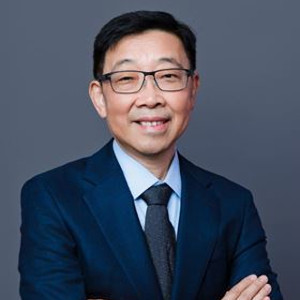
Prof Cao Jiannong
Vice President (Education)
Director of Institute for Higher Education Research and Development
Otto Poon Charitable Foundation Professor in Data Science
Chair Professor of Distributed and Mobile Computing
The Hong Kong Polytechnic University
Confirmed speakers

Associate Dean, Research Support, Office for Research
Professor, National Institute of Education – Learning Sciences & Assessment
Learning, fast and slow: Fostering learner agency with learning sciences-informed AIED
As AI continues to evolve at an unprecedented pace, the educational landscape is being transformed in ways that challenge traditional learning paradigms. This keynote talk will address the intersection of rapid AI advancements and the nuanced, reflective nature of human learning. It will discuss the distinction between AI for learning and AI for performance, urging AIED designers to prioritise genuine “slower” effortful learning processes over “faster” learning outcomes and solutions.
From a learning science perspective, Prof Chen Wenli will examine how AI-augmented learning environments can be designed not just as tools for quick answers, but as cognitive partners that enhance human agency, foster self-regulation, critical thinking, and metacognitive skills. Drawing on her empirical research, Prof Chen will share human-centric AIED designs to enhance their cognitive and regulatory capacities, rather than undermining them. This talk advocates a shift in focus from efficiency (faster) to meaningful learning (slower), highlighting the importance of human learners’ deep cognitive engagement and agency in human-AI collaboration for learning.
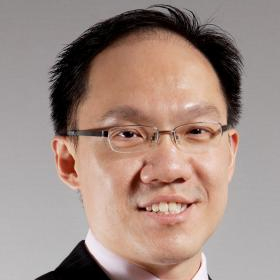
Director, SIT Teaching and Learning Academy
Associate Professor, Singapore Institute of Technology
Curriculum at the speed of industry: Building an AI-driven system for competency-based education at scale
As industry undergo rapid transformation, the role of universities is expanding correspondingly. Institutions must ensure that graduates possess strong employability, while also supporting working professionals in the continuous renewal of their skills to sustain workplace competitiveness.
In response to this challenge, applied universities must pursue sustained innovation in curriculum development, cultivating professional competencies that are closely aligned with occupational requirements. Competency-based education (CBE) provides a robust theoretical and practical foundation for this endeavour; however, precisely aligning curriculum systems with dynamically evolving workplace demands remains a substantial challenge when implemented at scale.
The Singapore Institute of Technology (SIT), Singapore’s first university of applied learning, has developed and deployed an AI-driven curriculum development system grounded in the principle of industry-education integration. The system is designed to enhance the efficiency of competency-based curriculum development while providing personalised learning support tailored to individual learners.
This presentation draws on practical implementation of the system to present three areas of application. First, the integration of occupational responsibilities, skills frameworks, and labour market data, mapped onto graduate competency indicators. Second, the use of authentic work tasks and competency performance standards to inform AI-assisted generation of modular curriculum structures. Third, the provision of personalised learning pathways and feedback for learners, advancing teaching practice from a uniform approach toward personalised applied learning.

Associate Professor, School of Computing and Information Systems
Singapore Management University
AI and the science of social-emotional learning
AI-personalised learning has become routine in STEM, yet social-emotional learning (SEL) — arguably a harder and higher-stakes domain — remains almost untouched by AI in terms of learning. This is not an accident but due rather to the difficulty: SEL outcomes are latent, delayed, socially entangled, and costly to measure, and the cost of error is potentially high. We argue that these properties make SEL a revealing testbed for the science of learning, because it forces the questions — measurement, causal identification, and safety — that STEM allows us to skip. Our premise is that AI personalisation is not merely a better delivery mechanism but can also be a causal instrument in analysing learning. By manipulating delivery parameters for a single learner, we can use an SEL intervention as an experiment to answer whether, through which parameters, and by how much AI personalisation can improve SEL. In this talk we cover several technical topics and open problems in AI for social-emotional learning.
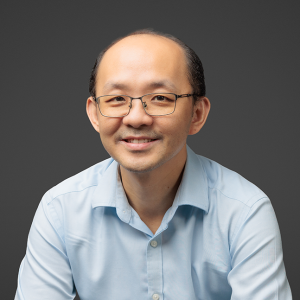
Principal Lecturer, Director (Education), Office of Artificial Intelligence and Digital Innovation (OAIDI)
Singapore University of Technology and Design (SUTD)
CodeHinter: AI Support for productive struggle in novice programming debugging
We present CodeHinter, an AI-assisted debugging tool integrated into Visual Studio Code that helps novice programmers debug semantic errors while promoting productive struggle. Rather than providing complete solutions, CodeHinter combines fault localization, interactive hints and quizzes, print-statement suggestions, and memory graph visualization to guide learners through the debugging process. In a pilot study with undergraduate students, the tool was found to be effective, intuitive, and easier to use than its earlier version. Participants especially valued its error-localization and end-to-end testing features. Our findings suggest that AI-based debugging tools should support active problem solving and be personalized to learners’ needs.

Senior Lecturer, Cheng Tsang Man Teaching Chair Professor
Singapore University of Technology and Design (SUTD)
Tool, teammate, or neither? Lessons from an AI integrated design course
As artificial intelligence becomes an integral part of higher education, the challenge is no longer whether to use AI, but how to intentionally design learning around it. This talk presents the design and implementation of iDeA, an AI-integrated first-year design course at SUTD, as a case study in adaptive human–AI collaboration. Rather than prescribing a fixed role for AI, iDeA enables students to intentionally choose whether AI serves as a tool, a teammate, or is deliberately left out of the learning process. The talk illustrates how this approach was implemented alongside the design of an AI-integrated curriculum, the deployment of AI graders for scalable formative assessment, and learning activities in which students actively engage with AI while developing critical thinking, creativity, and learner agency. It concludes with reflections on what has worked, the challenges encountered, and the lessons emerging from designing and teaching an AI-integrated course at scale.
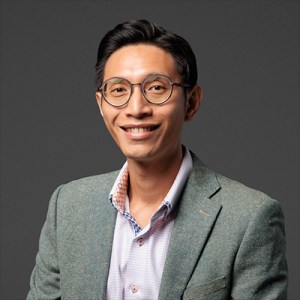
Senior Lecturer
Singapore University of Technology and Design (SUTD)
Teaching students when AI is right … and when physics says otherwise
Generative AI can rapidly produce convincing concepts, yet many remain unconstrained by physical reality. Consequently, STEM education faces a new challenge—helping students distinguish physically valid solutions from merely plausible outputs.
This presentation shares a Design·AI (D·AI) teaching approach implemented in Structures & Materials, a core course for Engineering Product Development undergraduates at the Singapore University of Technology and Design (SUTD). Rather than positioning AI as an answer generator, the learning experience places physics at the centre of the design process—students first create their own designs, use them as the basis for AI-assisted exploration, evaluate competing design concepts through physics-based simulations, and finally validate their decisions through fabrication and destructive testing.
Through this approach, we argue that the primary educational outcome of AI in Education is not to produce more proficient AI users, but to develop learners who know when AI can be trusted, when it should be challenged, and how disciplinary knowledge remains the foundation for responsible AI use. The approach illustrates one practical implementation of SUTD’s D·AI principles and offers a transferable pedagogical framework for integrating AI into technically rigorous STEM education while preserving disciplinary rigour and human judgment.
| For enquiries or assistance, please contact us at sci-math@sutd.edu.sg. |
The AIEd Symposium 2026 is an initiative jointly organised by the Science, Mathematics and Technology (SMT) cluster, the Information Systems Technology and Design (ISTD) pillar, and the Office of Strategic Planning, Singapore University of Technology and Design (SUTD).