
CoHabit: Eco-social artmaking for sustainable human-nature co-existence
How do we live alongside nature—not as distant observers, but as co-inhabitants sharing space, resources, and daily encounters?
This question sits at the heart of “There is no Tiger in the Mountain”, a multi-site exhibition on Pulau Ubin that emerges from CoHabit, a year-long research collaboration between Singapore University of Technology and Design (SUTD) and Drama Box Ltd.
The project is part of the Future-Ready Society Knowledge Partnership, supported by Tote Board.
Running from 28 March to 19 April 2026, the exhibition invites visitors to explore how humans and wildlife, particularly long-tailed macaques, navigate shared environments, and what it means to move from coexistence as a concept to cohabitation as a lived practice.
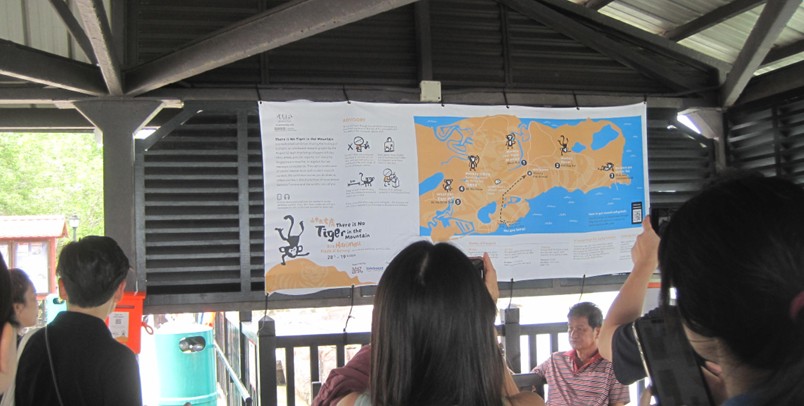
Research for a Future-Ready Society
The Future-Ready Society Knowledge Partnership is led by the Lee Kuan Yew Centre for Innovative Cities (LKYCIC). It brings together researchers, practitioners, policymakers, and communities to anticipate emerging societal challenges and co-develop grounded, forward-looking responses.
The programme supports projects that sit at the intersection of social change, behavioural insights, and real-world experimentation, particularly where transitions are uncertain, contested, or unevenly experienced across different groups.
In this context, CoHabit exemplifies how FRS-funded work operates:
- Grounded in lived experience (through community participation)
- Interdisciplinary in approach (bridging behavioural science, ecology, and the arts)
- Translational in intent (informing how society adapts to emerging challenges)
Human–wildlife coexistence on Pulau Ubin becomes not just a local issue, but a lens through which broader questions of living with nature, adapting to environmental change, and negotiating shared spaces can be explored.
A Research-Led, Creative Inquiry into Coexistence
At its core, CoHabit is not just an art project. It is a research-driven exploration that brings together behavioural insights, ecological knowledge, and community experience.
Leading the research component is Dr Cheng Nien Yuan from SUTD’s Humanities, Arts and Social Sciences cluster, whose work bridges disciplinary boundaries:
“We use a novel multidisciplinary and creative approach, bridging science-based understandings of macaques with the valuable lived experience of the community. Artistic methods engage our feelings and senses, allowing us to imagine and speculate possibilities of solving this complex issue.”
“The heart of CoHabit is in investigating the different ways that humans and wildlife, in this case the macaques, can live alongside one another,” shares Project 12 artistic director Dr Kok Heng Leun.
This integration of science, lived experience, and artistic practice reflects a broader shift in urban research towards approaches that engage not only rational analysis, but also perception, emotion, and everyday behaviour.
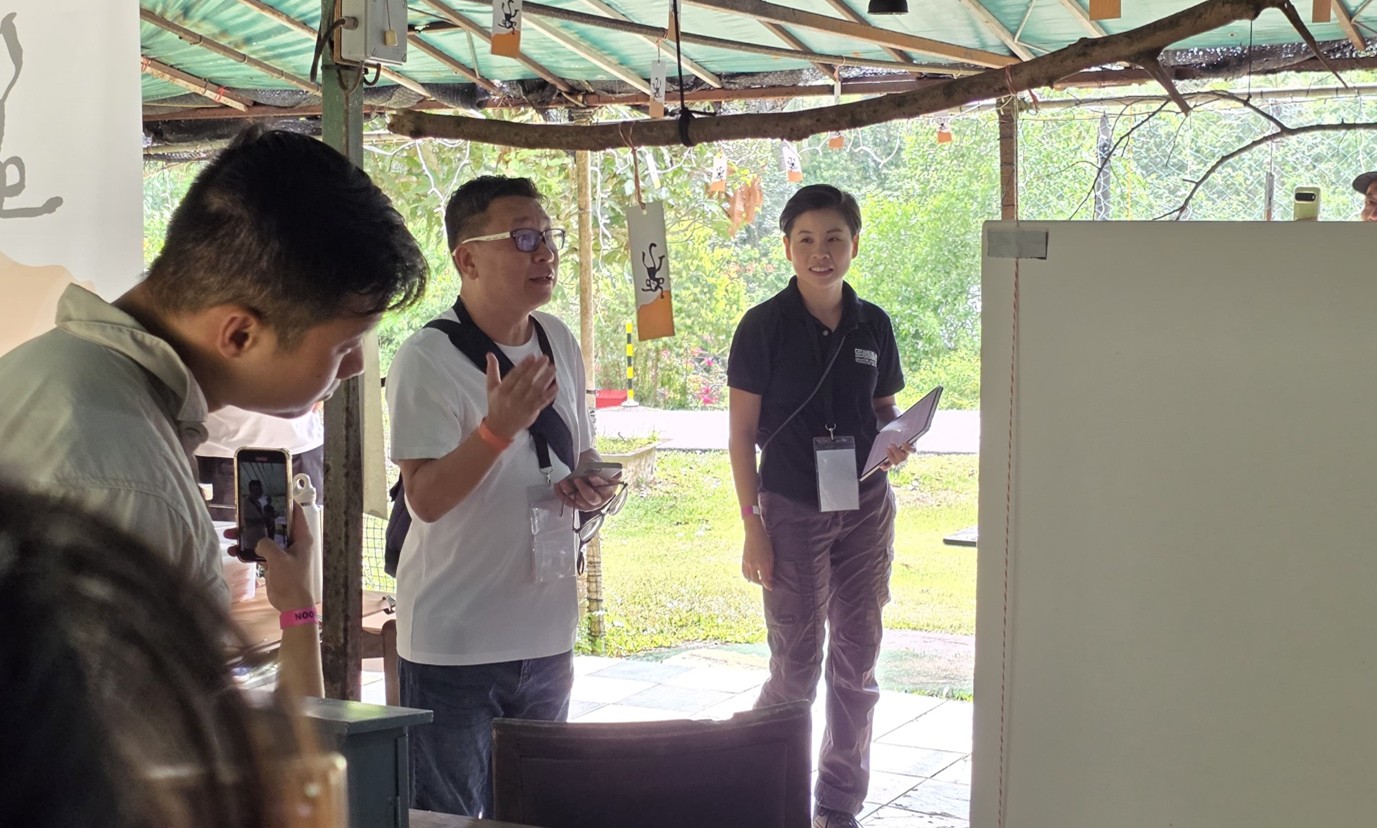
In his opening remarks for CoHabit, Dr Kok described Pulau Ubin as the protagonist—its people, infrastructure, flora and fauna—and offered a vision of the future rooted in connectedness, slowness, and wonder, not as nostalgia but as something living and very much alive.
Everyday Encounters as Data
A key innovation of the CoHabit project lies in its participatory methodology.
Villagers on Pulau Ubin were equipped with an observational toolkit to document their encounters with macaques. These ranged from routine sightings to more disruptive interactions—macaques entering homes, foraging for food, and occupying shared spaces.
These accounts were treated as structured insights into how human and wildlife territories overlap and interact. The resulting observations informed both research analysis and the development of artistic interventions.
Encounters were often “equally funny and frustrating,” exposing the fragile and shifting boundary between human space and forest space.
This reframing from isolated incidents to patterned interactions raises a deeper question: What does coexistence actually require?
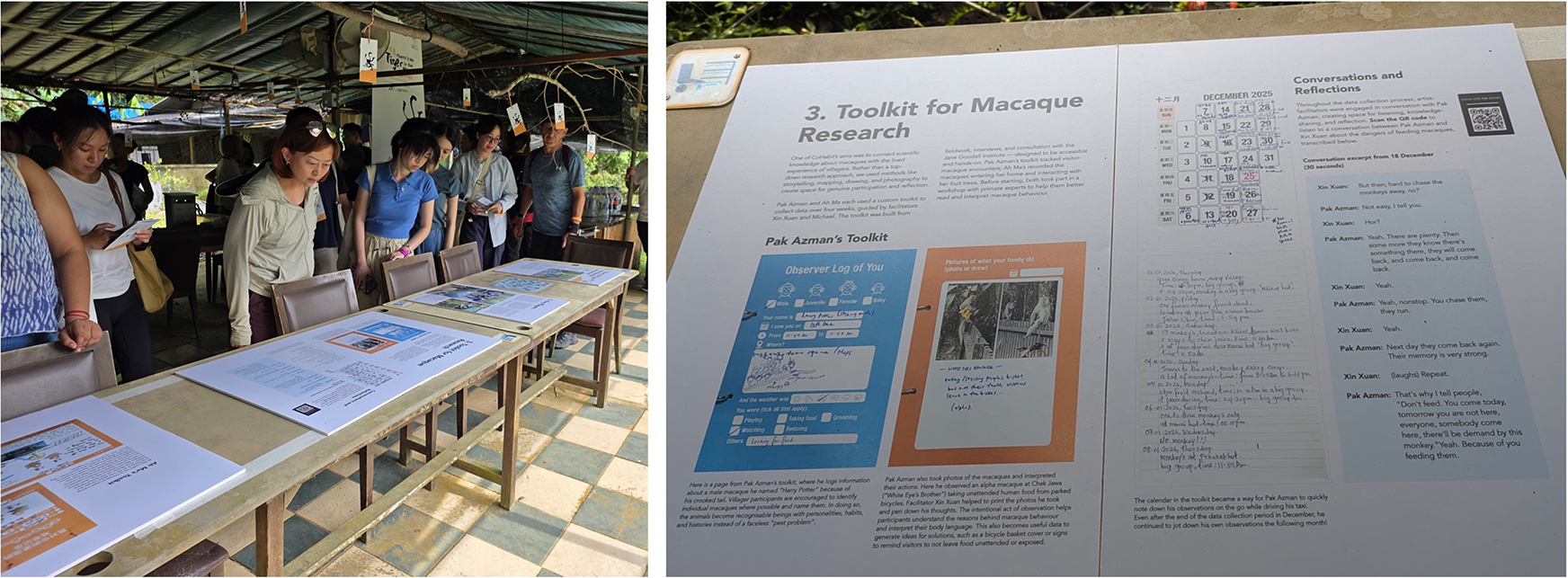
Research toolkits used by Pulau Ubin residents who documented their own encounters and observations, bringing local knowledge directly into the research.
Designing for CoHabitation
The exhibition translates these research insights into a series of site-specific installations across Pulau Ubin.
Works by artists such as Shirley Soh and Lynette Quek are embedded within the landscape, inviting visitors to engage with the island not just visually, but experientially.
These installations explore:
- Buffer zones between human and wildlife activity
- Shared spaces and their implicit rules
- Sensory and emotional dimensions of encounters
- Speculative futures of human–wildlife relations
Visitors experience the exhibition through a self-guided journey across multiple sites, supported by digital content accessed via smartphones and earphones.
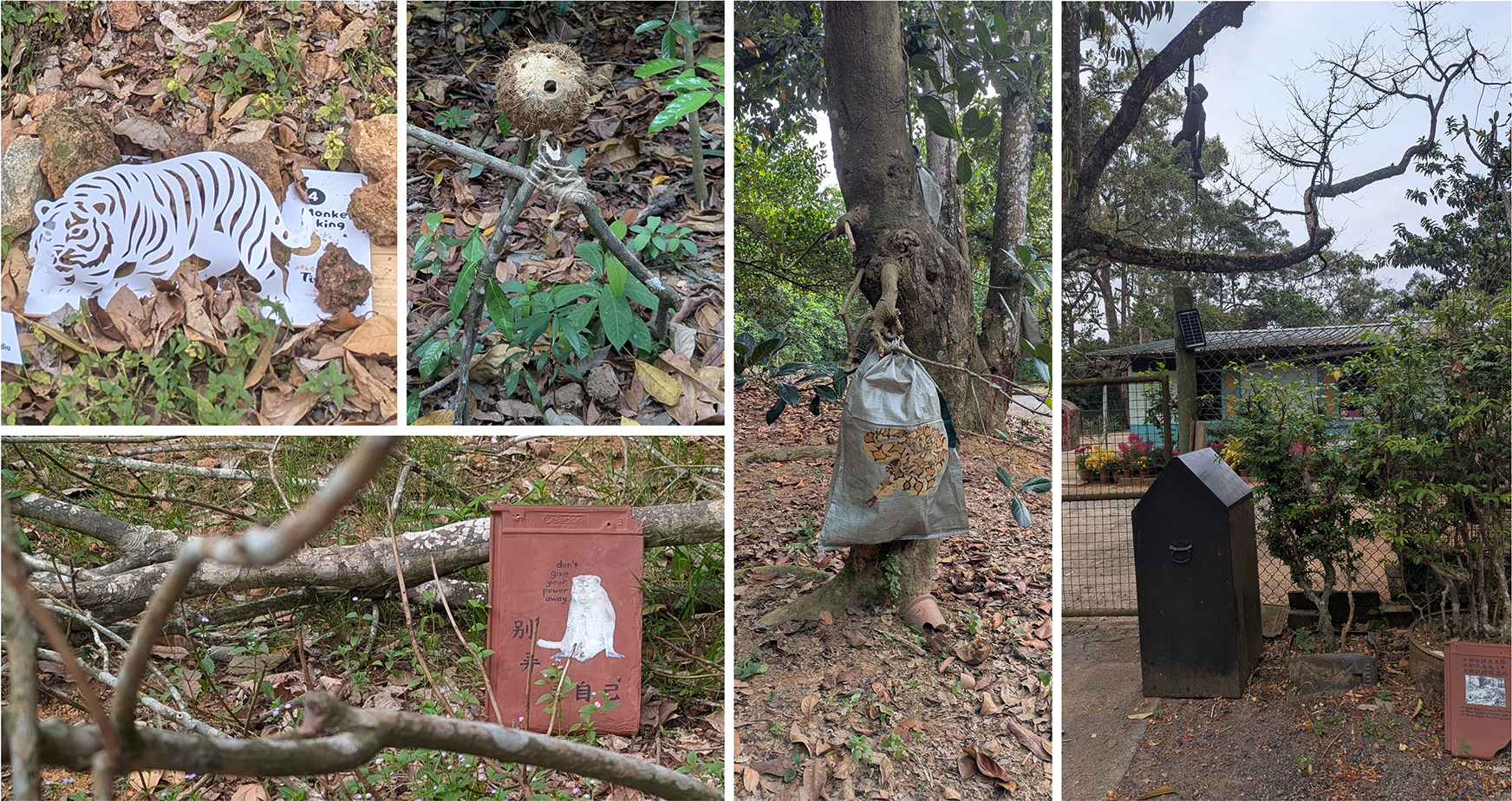
Scattered along the trail, playful installations guide visitors through a “monkey-spotting journey” across five exhibition stops, where moments of delight meet the quiet ingenuity of living alongside macaques.
From Observation to Reflection
More than an exhibition, “There is no Tiger in the Mountain” serves as a public interface for research.
It shares the findings and artistic responses emerging from this research process, reflecting the insights, conversations, and stories gathered along the way.
Through this, the exhibition invites visitors to:
- Observe everyday human–wildlife interactions
- Reflect on their own behaviours and assumptions
- Consider practices that support more sustainable coexistence
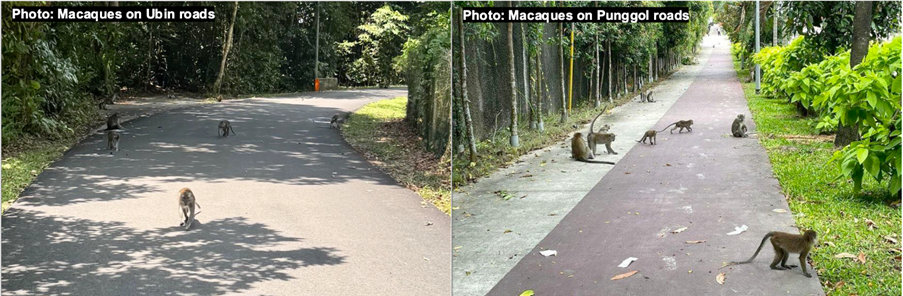
This aligns closely with broader urban transitions in Singapore where efforts to integrate nature more deeply into the city will inevitably increase human–wildlife encounters.
From Coexistence to CoHabitation
CoHabit foregrounds an important shift: from viewing coexistence as passive tolerance, to understanding cohabitation as an active, designed, and negotiated relationship.
This resonates strongly with the Future-Ready Society agenda where the goal is not only to anticipate change, but to shape how societies adapt in ways that are inclusive, grounded, and sustainable.
By combining participatory research, behavioural insights, creative and sensory engagement, the project demonstrates how complex socio-ecological challenges can be approached in ways that are both rigorous and publicly meaningful.
Towards New Forms of Living Together
CoHabit offers a compelling proposition: that coexistence is not a static outcome, but an ongoing process of negotiation, adaptation, and design.
As cities evolve and human–nature interactions intensify, projects like this provide a glimpse into how research, communities, and creative practice can come together to shape more future-ready, cohabitable environments.