

LKYCIC Showcases Research on Responsive Cities at the Science of Cities Symposium 2026
Researchers from the Lee Kuan Yew Centre for Innovative Cities (LKYCIC) contributed to the Science of Cities Symposium (SOCS) at the World Cities Summit (WCS) 2026, sharing research and insights on how cities can become more responsive, resilient, and people-centred.
Held under the theme of “Responsive Cities”, the symposium brought together researchers, practitioners, policymakers, and industry experts from around the world to explore how research and innovation can address complex urban challenges. Through keynote addresses, research presentations, and poster sessions, LKYCIC researchers showcased work spanning urban governance, mobility, climate resilience, artificial intelligence, and public space planning.
The Centre contributed to the symposium through keynote leadership, research spotlights, and poster presentations, highlighting how interdisciplinary urban research can be translated into policy and practice.
A key highlight of the symposium was the opening address by Professor Cheong Koon Hean, Chair of LKYCIC. In her remarks, she emphasised the need for more responsive and human-centred planning systems that strengthen the connection between people, evidence, and decision-making.
Rather than viewing data and technology as ends in themselves, Professor Cheong highlighted their role in helping cities better understand residents’ needs, anticipate emerging challenges, and develop more effective responses. She underscored the importance of integrating data, technology, and planning systems to support cities that are not only efficient, but also resilient and responsive to people’s everyday needs.

Professor Cheong Koon Hean, Chair of LKYCIC, delivering the opening address at the Science of Cities Symposium 2026 (Photo courtesy of World Cities Summit).
Beyond the opening address, LKYCIC researchers presented a series of projects that demonstrate how interdisciplinary research can support better urban outcomes.
At the poster exhibition, researchers shared studies spanning social cohesion, urban mobility, climate resilience, public space use, and participatory approaches to city-making. Collectively, these projects reflected LKYCIC’s commitment to understanding cities through both human experiences and urban data, generating evidence that can inform policy and planning practice.
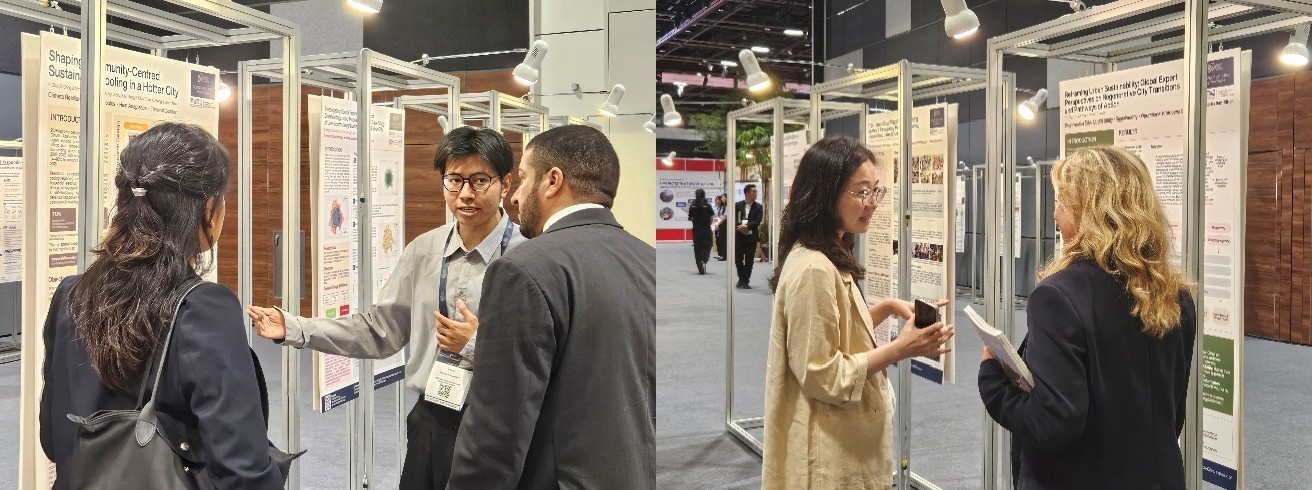
LKYCIC researchers Mr Khant Min Naing and Dr Yunjing Li (Jennifer) presenting their research posters at the symposium.
Among the featured studies was research by Mr Li Bayi, conducted in collaboration with the University of Tokyo, examining how Singapore residents use urban parks. The project explored how park characteristics, surrounding neighbourhoods, and local amenities influence visitation patterns, providing insights that can support more equitable and user-responsive green space planning.
Another study, presented by Ms Sarah Wong, examined the relationship between accessibility and realised mobility in Ho Chi Minh City. The findings suggest that transport disadvantage is not solely a matter of infrastructure provision, but is also shaped by socioeconomic factors, highlighting the importance of considering social equity in transport planning and policy.
Dr Dinithi Jayasekara presented research on AI transformation across education, industry, and the public sector. Her work explored how organisations are adopting AI to support productivity and innovation, while emphasising the continued importance of human judgement, ethics, creativity, and governance. The research highlighted the need to view AI not simply as an automation tool, but as a collaborative partner that can augment human capabilities.
Several LKYCIC researchers were also featured in the symposium’s spotlight sessions, providing opportunities to share their work with an international audience and engage in discussions with fellow researchers, practitioners, and industry leaders.
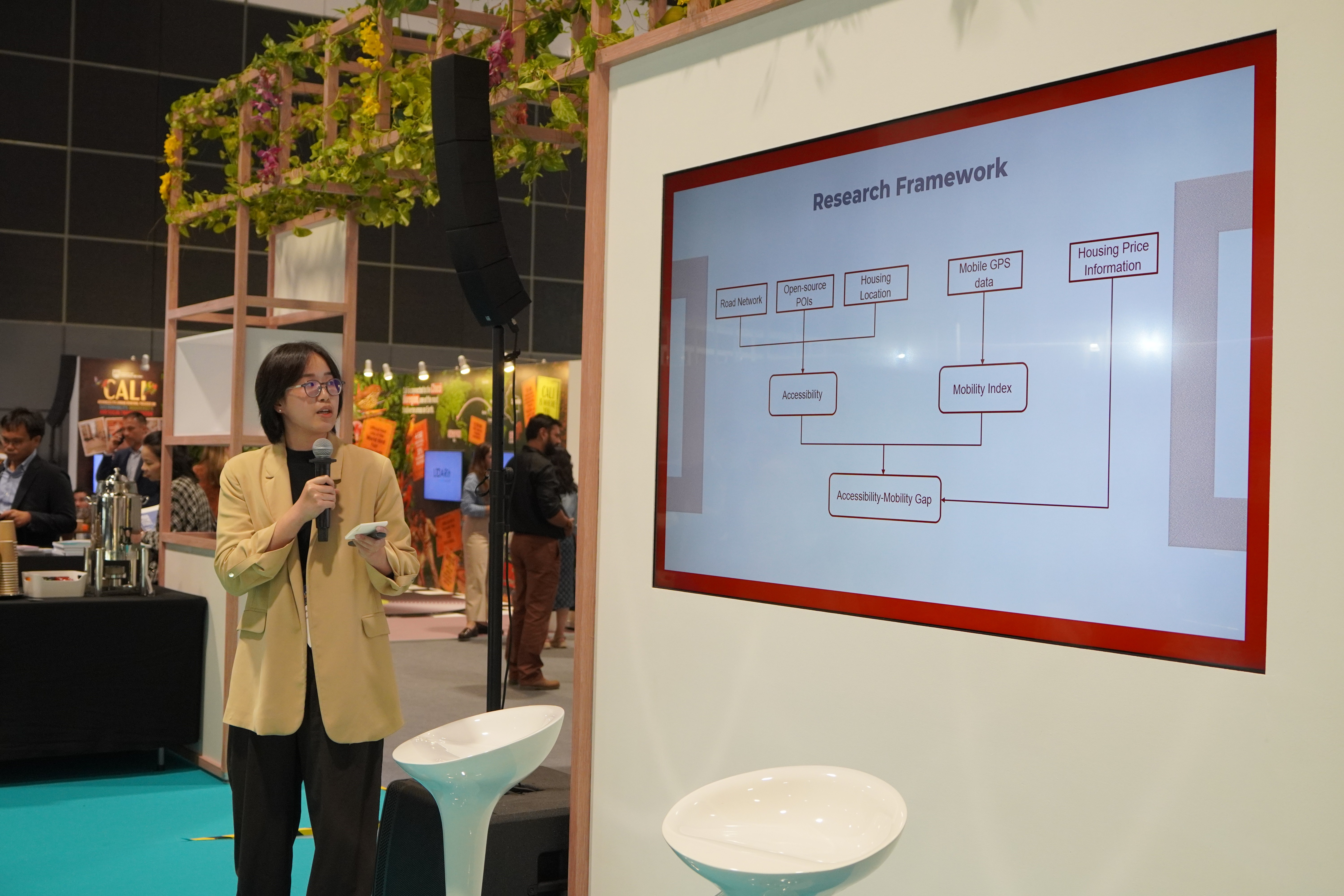
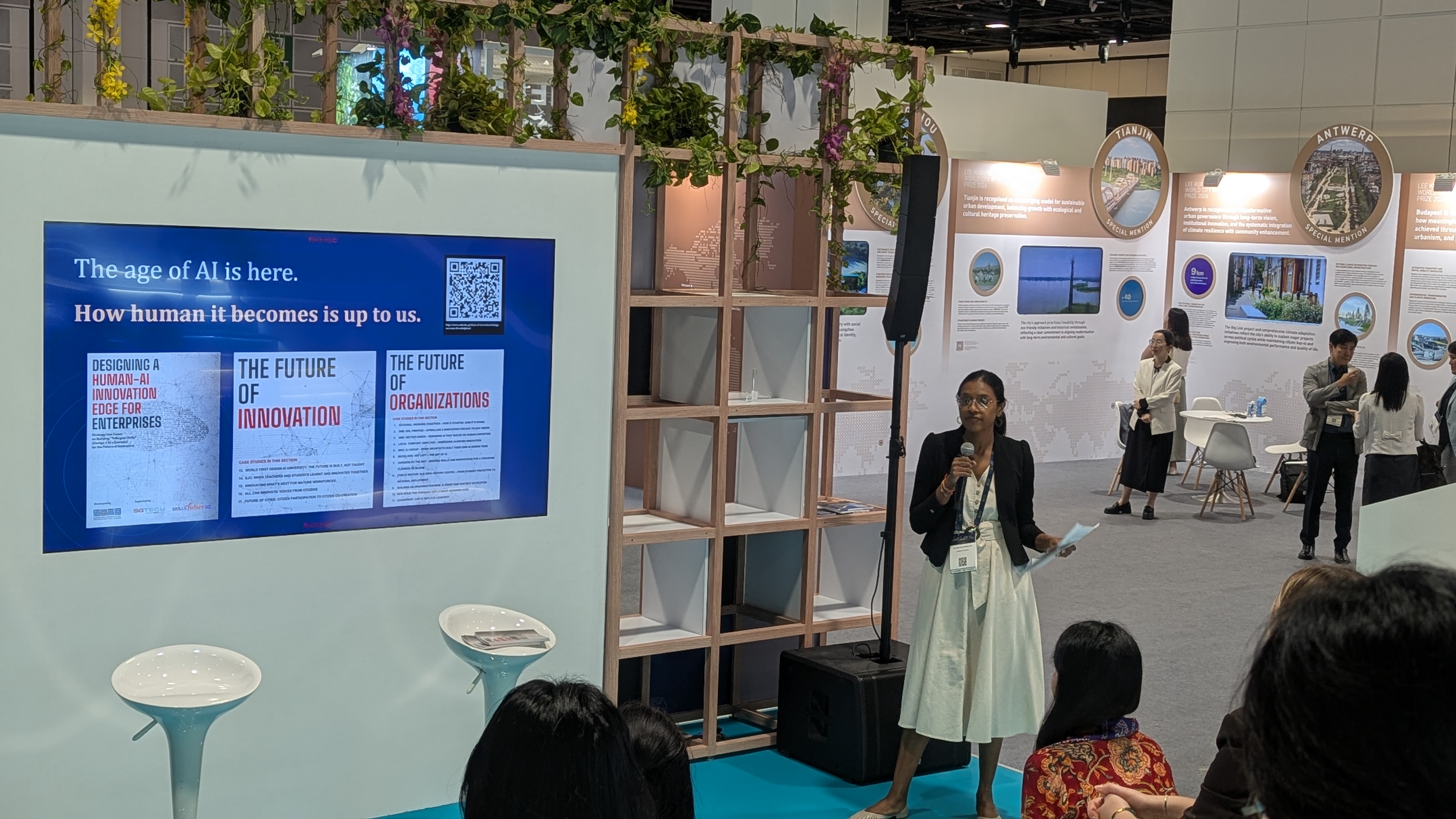
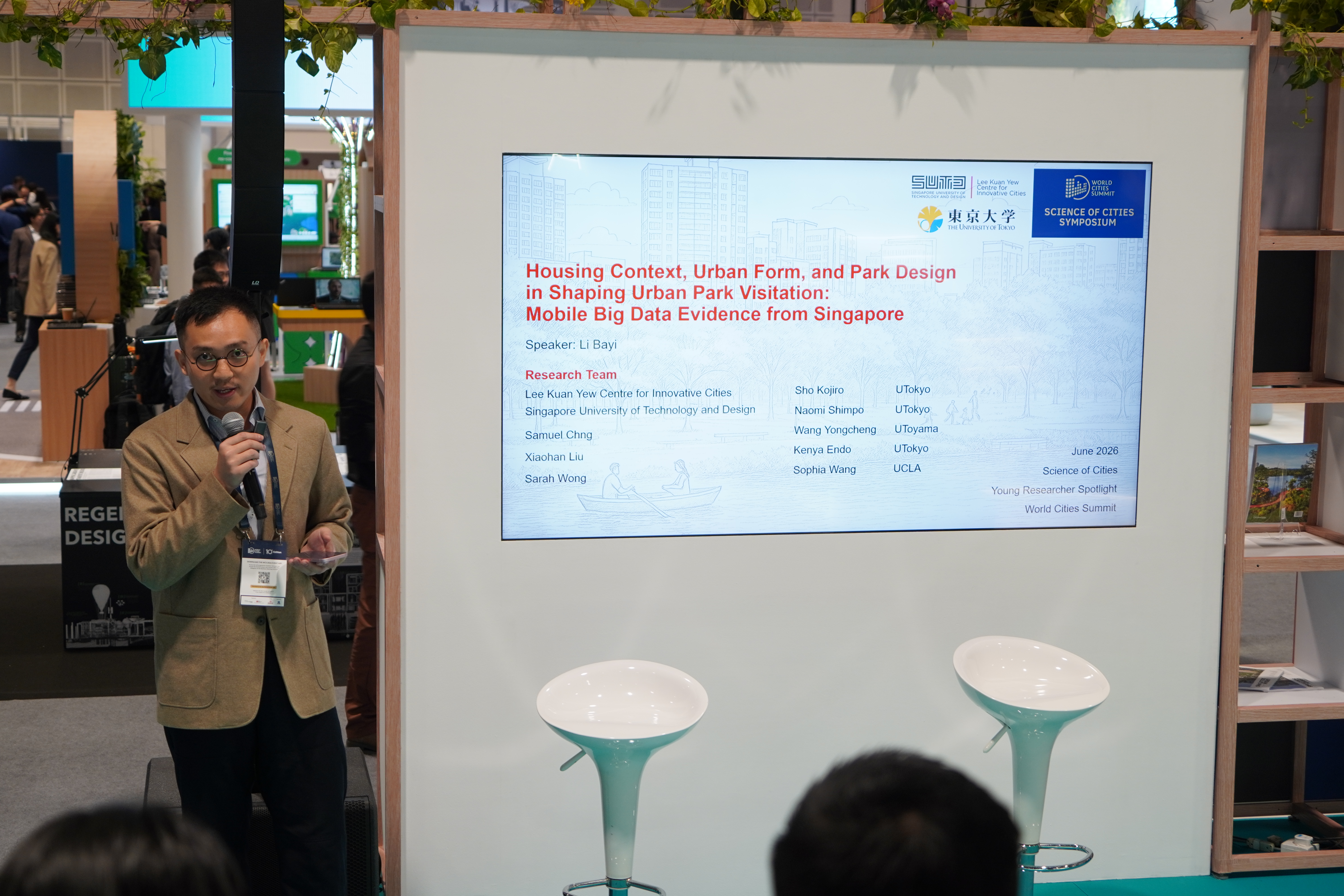
LKYCIC researchers Mr Li Bayi and Ms Sarah Wong presenting at the SOCS Young Researcher Spotlight, and Dr Dinithi Jayasekara presenting at the SOCS Research Spotlight.
Together, these projects illustrate the breadth of research being undertaken at LKYCIC to address some of the most pressing challenges facing cities today. Whether examining mobility patterns, public space use, climate resilience, social equity, or emerging technologies, the Centre’s work is united by a common goal: generating research-informed solutions that improve urban life and support more inclusive, liveable, and resilient cities.
The Science of Cities Symposium was one of several platforms through which LKYCIC contributed to the World Cities Summit 2026. Across the Summit, the Centre’s researchers participated in plenaries, panel discussions, workshops, exhibitions, and knowledge-sharing sessions, contributing expertise on topics ranging from urban innovation and governance to climate resilience, mobility, and regenerative cities.
Learn more about LKYCIC’s research and how it contributes towards shaping urban futures here.