

LKYCIC Young Leaders Join Global Dialogue on the Future of Cities at WCS 2026
Five researchers from the Lee Kuan Yew Centre for Innovative Cities (LKYCIC) were selected to participate in the World Cities Summit (WCS) Young Leaders Programme 2026, joining a global network of emerging urban leaders committed to shaping more resilient, inclusive, and sustainable cities.
The WCS Young Leaders Programme brings together promising leaders from government, industry, academia, and civil society who are making meaningful contributions to urban development and the global urban agenda. Through a series of dialogues, workshops, and networking opportunities, participants engage with city leaders and experts to explore solutions to some of the most pressing challenges facing cities today.
Representing LKYCIC were Dr Suhaila Zainal Shah, Dr Ng Shu Tian, Ms Flora Du, Mr Li Bayi, and Ms Dolphie Bou. Together, they reflect the Centre’s interdisciplinary approach to urban research, spanning social resilience, governance, sustainability, climate adaptation, computational social science, urban systems, regenerative urban development, and emerging approaches to urban innovation.
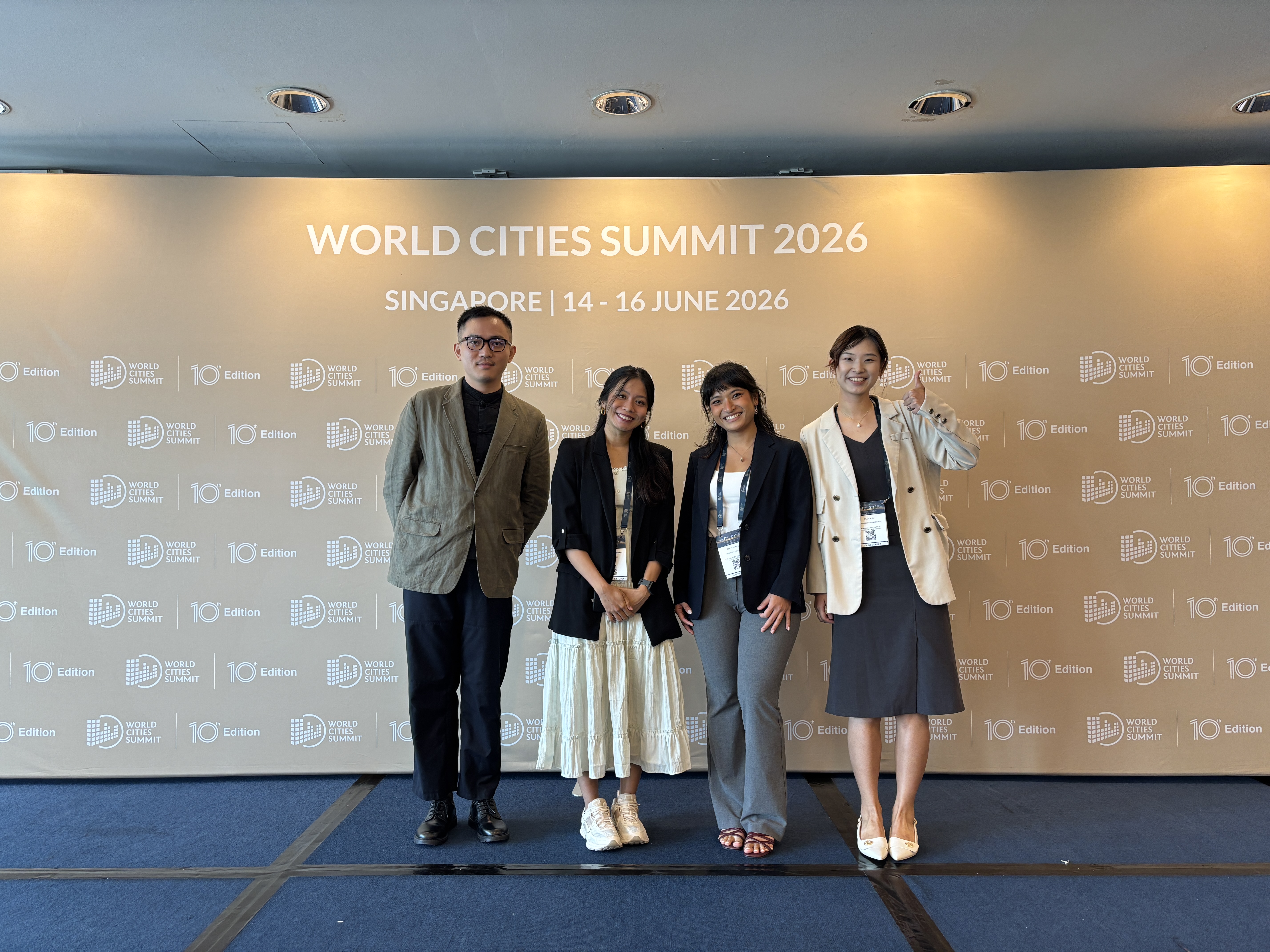
LKYCIC’s representatives to the World Cities Summit Young Leaders Programme 2026. From left to right: Mr Li Bayi, Dr Suhaila Zainal Shah, Ms Dolphie Bou, and Ms Flora Du. Dr Ng Shu Tian also participated in the programme.
As part of the programme, the Young Leaders participated in the Young Leaders Symposium held on 14 June 2026 at the Suntec Singapore Convention & Exhibition Centre. Bringing together policymakers, practitioners, and emerging leaders from around the world, the symposium focused on how cities can navigate demographic change, technological disruption, and growing sustainability challenges.
The event opened with welcome remarks by Mr Hugh Lim, Executive Director of the Centre for Liveable Cities, followed by an opening address by Dr Syed Harun Alhabsyi, Senior Parliamentary Secretary for the Ministry of National Development and Ministry of Education.
A highlight of the symposium was the leadership panel discussion, Navigating Urban Transitions: Leadership Responses to Demographic and Technological Shifts. Moderated by Professor Orlando Woods, Director of the SMU Urban Institute, Singapore Management University, the panel brought together city leaders from Singapore, Australia, the United States, and French Polynesia to discuss how cities can respond to the twin challenges of ageing populations and rapid technological change.
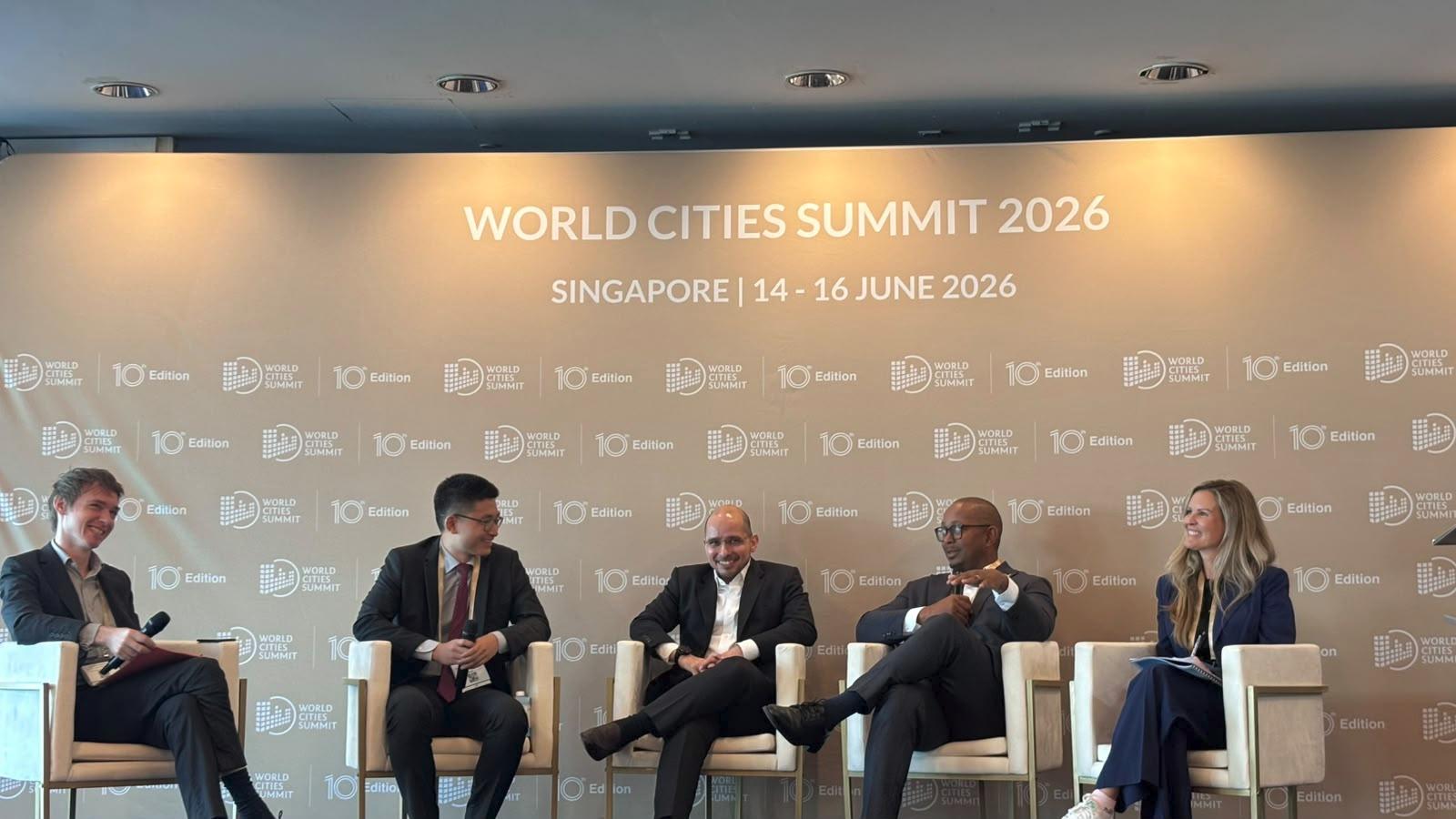
City leaders from Singapore, Australia, the United States, and French Polynesia discussed how cities can respond to demographic and technological transitions.
Drawing on experiences from diverse urban contexts, the panellists reflected on how demographic change, artificial intelligence (AI), and evolving workforce expectations are reshaping cities and communities. While the challenges varied across geographies, a common theme emerged: successful urban transitions require integrated responses that place people at the centre of technological change.
Discussions highlighted the importance of lifelong learning, equitable access to opportunities, caring urban environments that support ageing populations, and effective communication to help communities navigate uncertainty and change. Panellists also emphasised that while AI offers significant opportunities to improve public services, healthcare, and productivity, human capabilities such as empathy, communication, and leadership will remain essential in shaping resilient and inclusive cities.
These conversations closely reflect many of the issues being explored through LKYCIC’s research, including how cities can respond to climate risks, strengthen social cohesion, support workforce transitions, and harness technology in ways that improve quality of life and urban wellbeing.
The symposium concluded with an interactive workshop, From Insights to Action: What Cities Need During Demographic and Technological Transitions, where Young Leaders worked in multidisciplinary groups to explore practical responses to emerging challenges and identify opportunities for collaboration across cities and sectors.
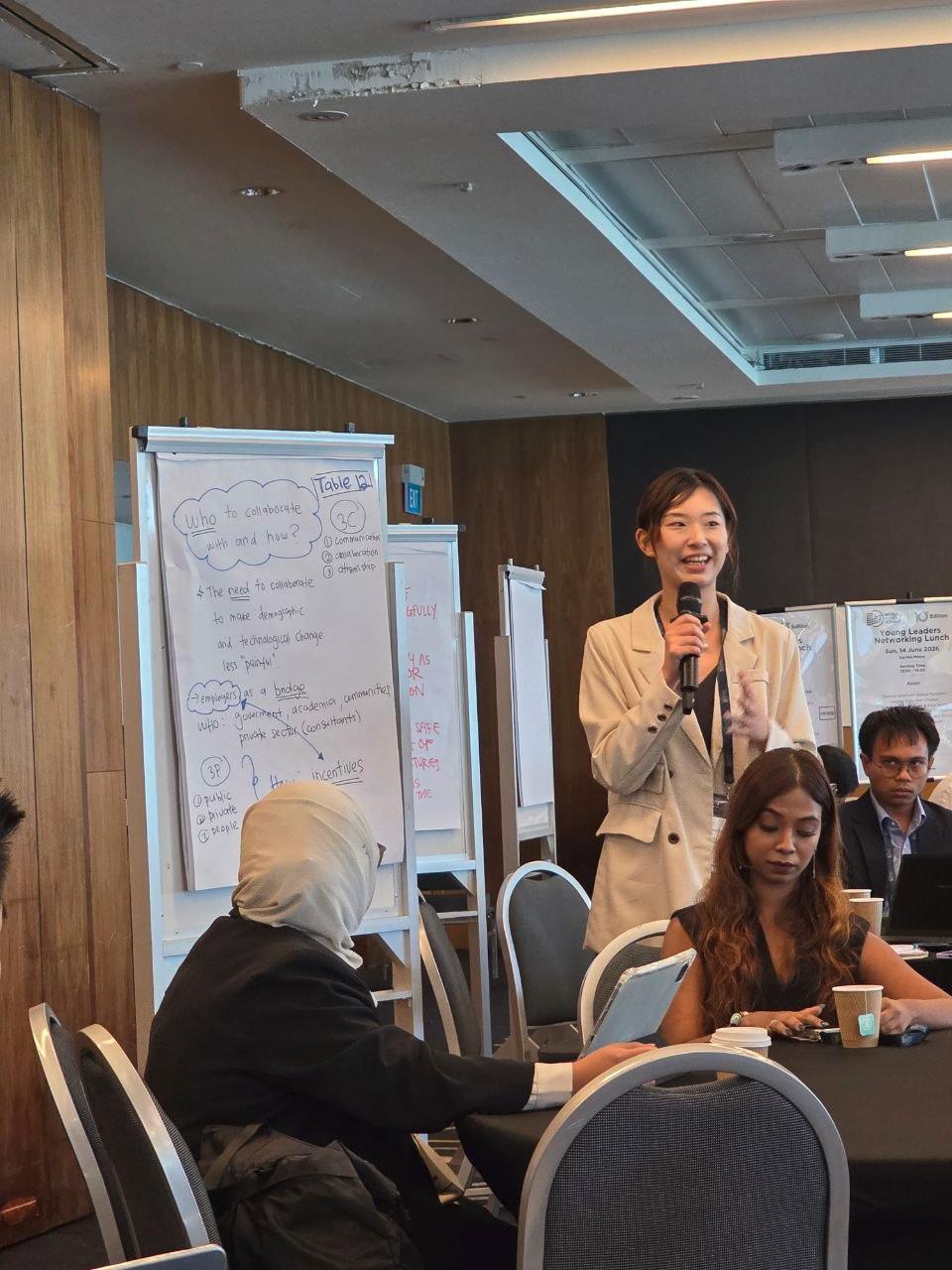

The discussions reinforced a message that resonates strongly with LKYCIC’s work: building future-ready cities requires more than technological innovation alone. It depends on inclusive governance, resilient communities, and leadership that can bridge disciplines, sectors, and generations.
The Young Leaders Programme was one of several ways in which LKYCIC contributed to the World Cities Summit 2026. Throughout the Summit, the Centre’s researchers and faculty participated in panel discussions, plenaries, workshops, and knowledge-sharing sessions on topics ranging from urban innovation and climate resilience to mobility, governance, and the future of cities. Together, these engagements reflect LKYCIC’s ongoing commitment to advancing research-informed solutions and contributing to global conversations on creating more liveable, sustainable, and resilient cities.
As cities continue to confront complex transitions, programmes such as the WCS Young Leaders Programme play an important role in developing the next generation of urban leaders. LKYCIC congratulates Dr Suhaila Zainal Shah, Dr Ng Shu Tian, Ms Flora Du, Mr Li Bayi, and Ms Dolphie Bou on joining the Young Leaders network and looks forward to their continued contributions towards building more resilient, inclusive, and future-ready cities.