

Urban Resilience in 3 Acts: A Collaborative Showcase of Research from LKYCIC
As part of Ideas Festival 2026 supported by the Social Science Research Council (SSRC), the Lee Kuan Yew Centre for Innovative Cities (LKYCIC) at the Singapore University of Technology and Design (SUTD) organised a seminar on 13 March 2026 looking at Singapore’s urban resilience from three interconnected lenses. The seminar explored themes across the perspectives of economic resilience, social cohesion, and climate change adaptation.
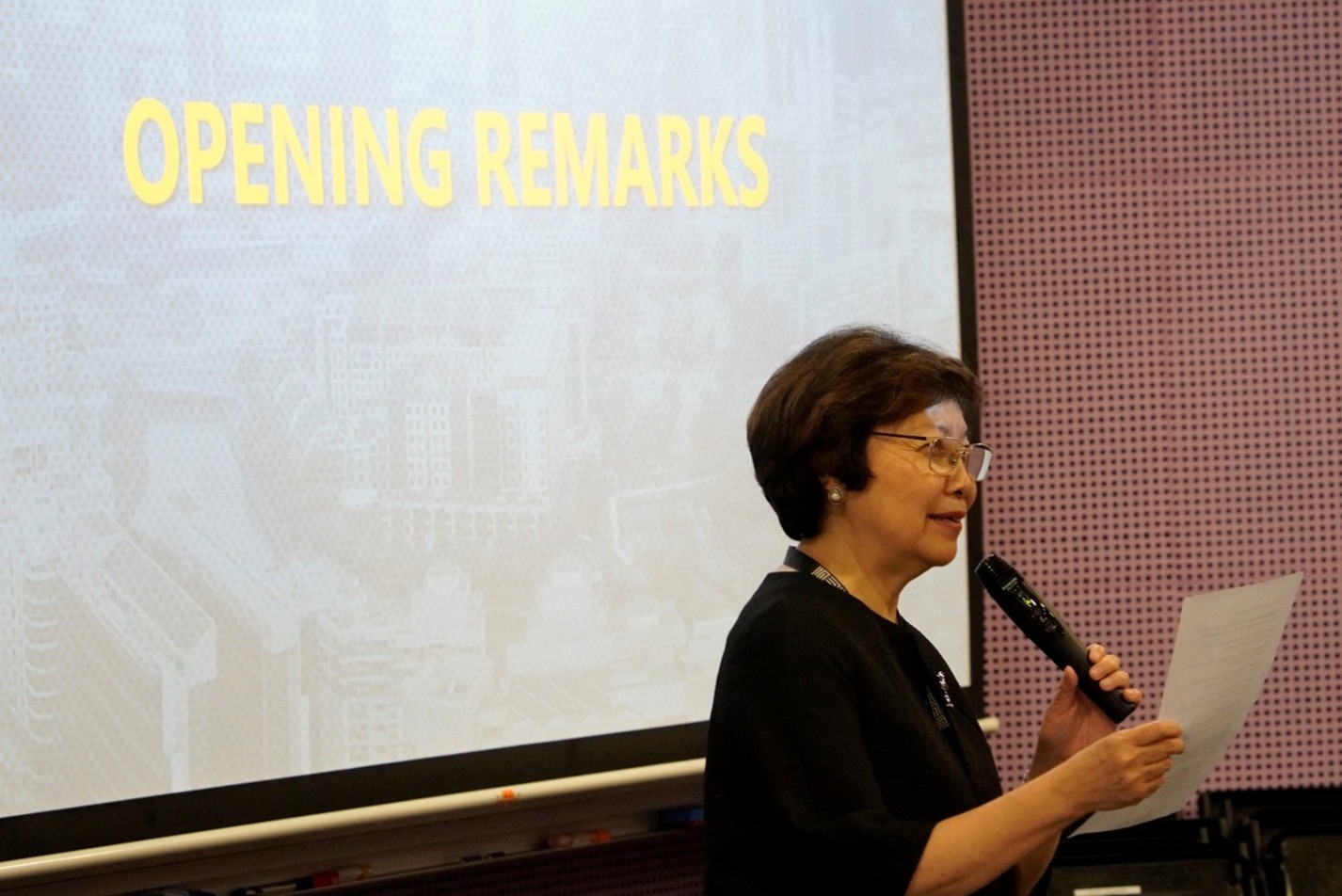
Professor Cheong Koon Hean, Chair of LKYCIC, opened the seminar by introducing the Centre’s transdisciplinary approach to applied social science research, and how its strength lies in informing policy design.
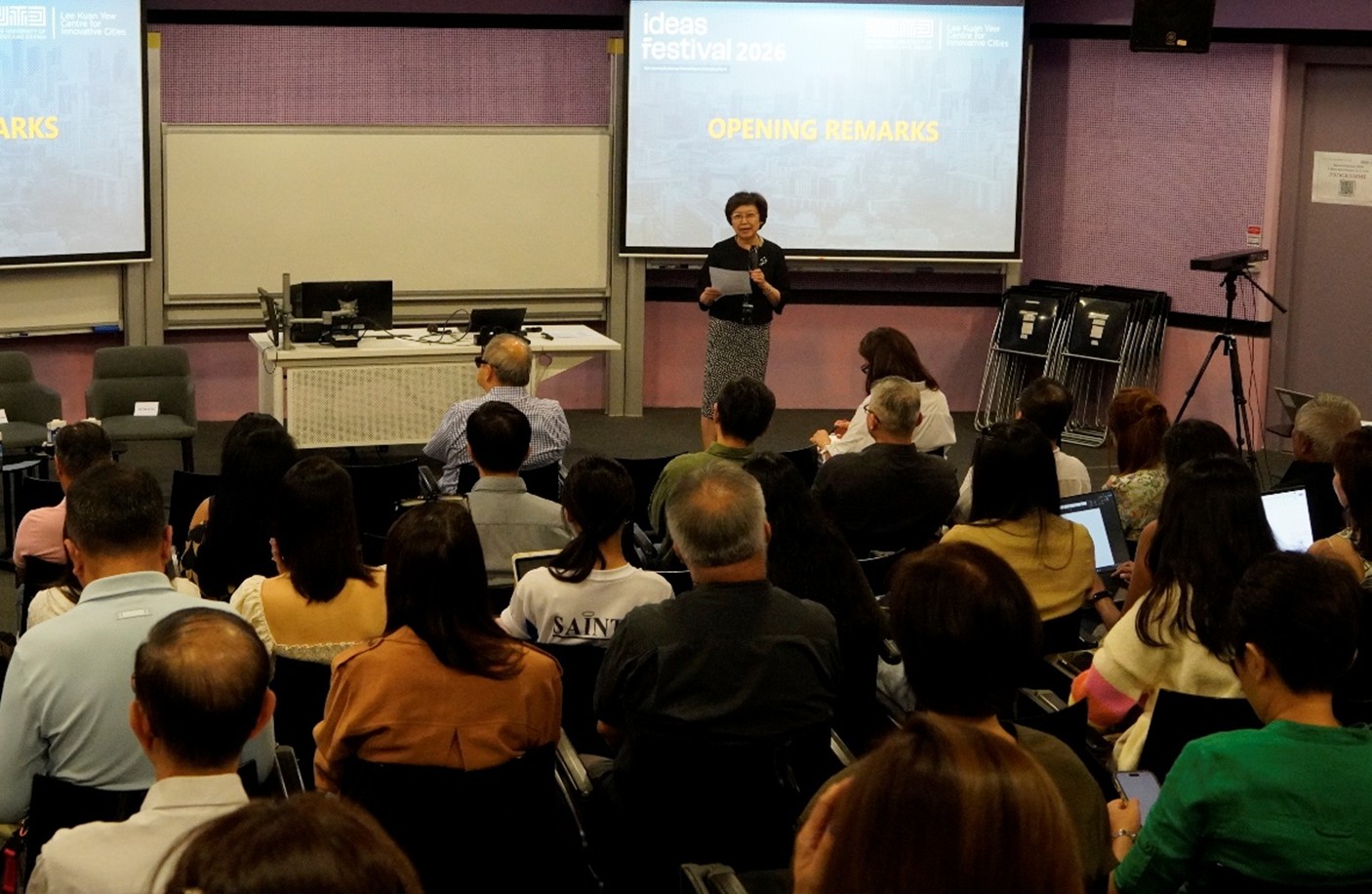
The seminar explored urban resilience from three perspectives: economic resilience, social cohesion, and climate change adaptation.
Economic Resilience: The Future of Innovation IS the Future of Work
The opening session was delivered by Mr Poon King Wang, Chief Strategy & Design AI Officer at SUTD and Director of LKYCIC, who outlined how LKYCIC’s research is shaping the future of work and innovation. His team’s studies on task‑based transitions, resilience and design, and foresight methods have informed national initiatives such as the National AI Strategy, Singapore’s human‑centered job redesign guide, and SkillsFuture’s 2025 report.
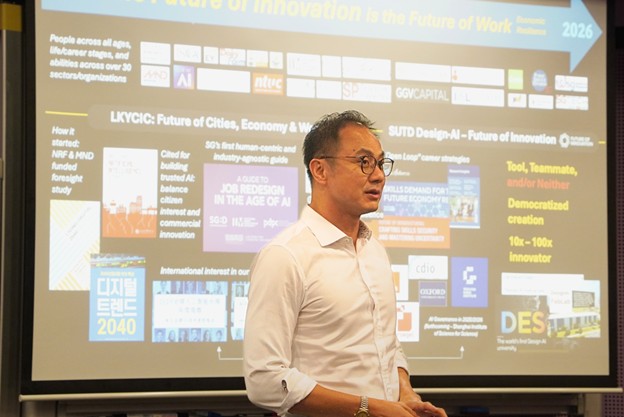
Mr Poon King Wang shared insights from over a decade of LKYCIC’s contributions to the future of work and innovation.
Drawing on over a decade of research, Mr Poon highlighted a central challenge: many organisations still use AI incorrectly. Misconceptions often arise from outdated yet reputable sources, while workplaces tend to confine AI to simple text or image generation despite its broader ability to analyse data, write code, reason across spreadsheets, and build agents. His team’s research showed that when workers use AI more fully, they can prototype faster, judge outputs more critically, reduce waste, and build what he termed “multivitamin resilience” by diversifying tasks and strengthening transitions.
Two members of the team demonstrated these principles through applied examples. Mr Jose Paolo Tambagan Boquiren, Senior Research Assistant of LKYCIC, showcased a master‑planning studio where learners used custom GPT tools to turn community sketches into rapid design concepts. Dr Dinithi Jayasekara, Research Fellow of LKYCIC, showed how tailored GPT tools can support children’s language learning, illustrating how design‑AI approaches can strengthen capability in everyday life.
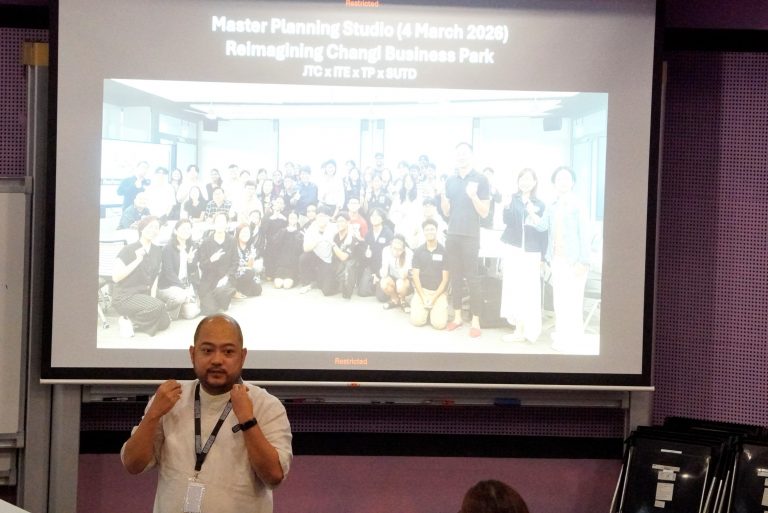
Mr Jose Paolo Tambagan Boquiren, introduced the Master Planning Studio on reimagining Changi Business Park, highlighting the collaborative work of students and partners from JTC, ITE, TP, and SUTD.
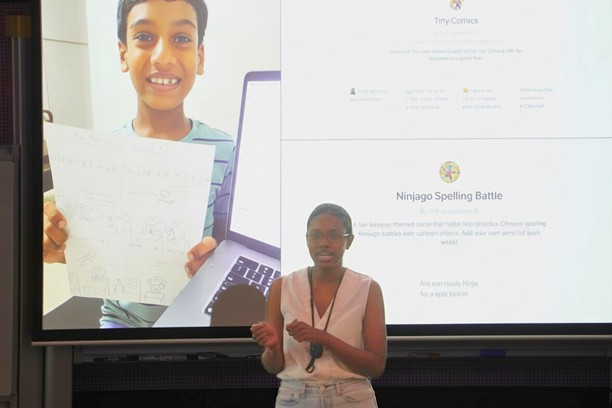
Dr Dinithi Jayasekara demonstrated how she utilised custom GPT tools to enhance her son’s language learning, using on‑screen examples from comic‑based and spelling‑practice activities.
Learn more about LKYCIC’s research on AI and the future of work here.
Social Cohesion-Project BOND: Building Our Neighbourly Dynamics
The second session was led by Dr Suhaila Zainal Shah, Research Fellow of LKYCIC. Drawing on insights from Project Building Our Neighbourly Dynamics (BOND), a mixed-methods study of two housing typologies—Tampines GreenEdge, comprising homeowner and rental blocks, and West Plains @ Bukit Batok, which includes homeowner, rental, and integrated blocks—the study explored how everyday interactions, design, and lived rhythms shape social cohesion.
Dr Suhaila shared four key insights illustrating how cohesion takes shape on the ground. First, shared spaces such as corridors and coffeeshops play a crucial role in enabling everyday neighbourly interactions. Second, social ties cluster differently across housing typologies, with residents in integrated blocks showing greater potential for cross-tenure relationships, underscoring the influence of block design. Third, interactions are shaped by everyday spatial and temporal rhythms, creating natural touchpoints where residents’ paths overlap. Finally, repeated interactions alone do not necessarily build trust, pointing to the need for additional levers to deepen neighbourly bonds.
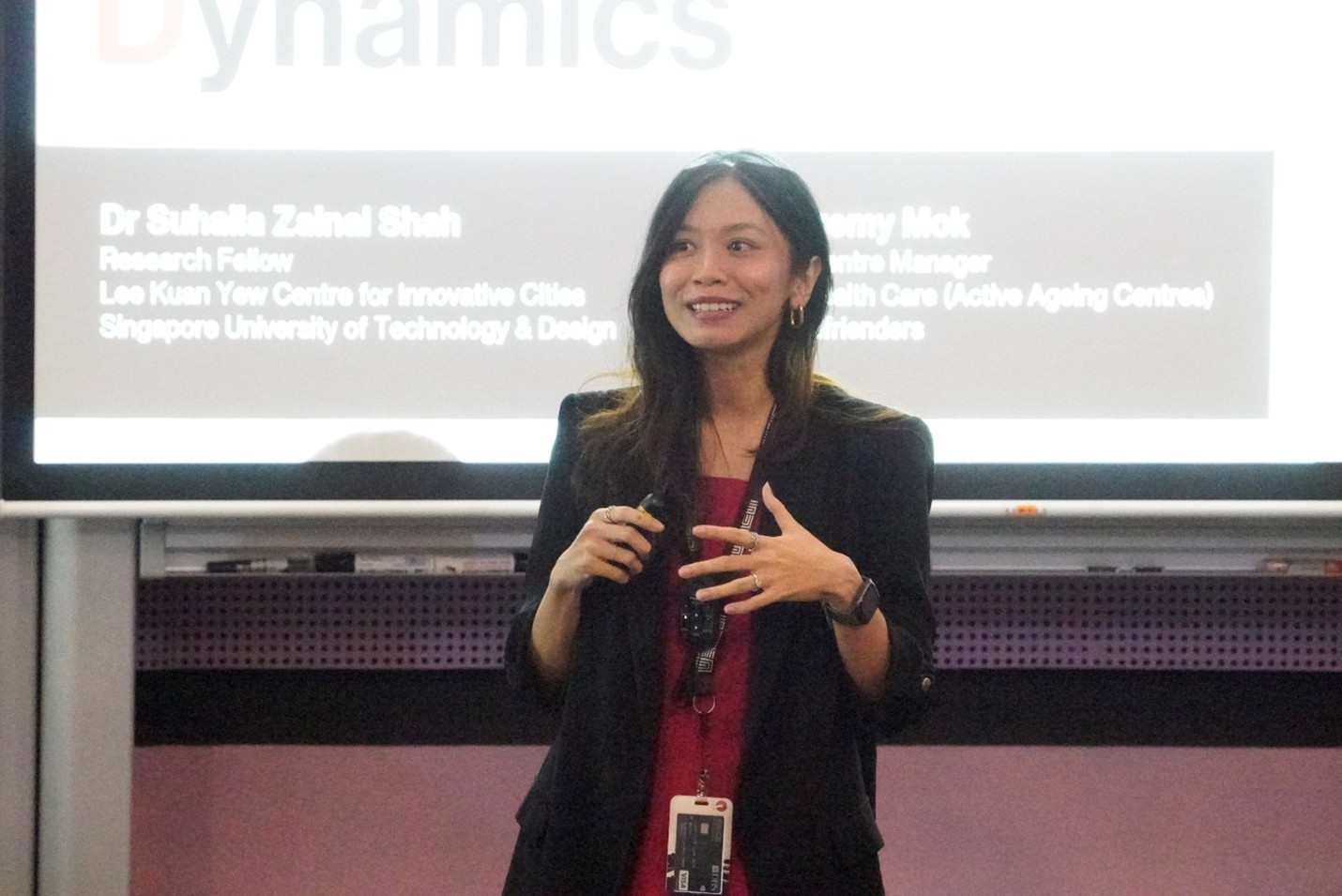
Dr Suhaila Zainal Shah unpacked the conditions that can help transform simple encounters into stronger community ties, offering a grounded perspective on how cohesion can be fostered.
Dr Suhaila concluded by outlining three such levers of design, rhythms, and relationships as key pathways for strengthening social cohesion. These findings were reinforced by Mr Jeremy Mok, Senior Centre Manager, Social Health Care (Active Ageing Centres), Lions Befrienders, who shared on-the-ground insights on how activating common spaces, engaging block ambassadors, and leveraging digital tools such as the Our Kampung app can foster reciprocity and care.
Ultimately, urban resilience is built not only through systems and infrastructure, but through relationships grounded in familiarity and everyday acts of mutual care. This research was made possible with the support of the Future-Ready Society Knowledge Partnership, funded by the Tote Board, with key contributions from public agencies and community partners involved in the research.
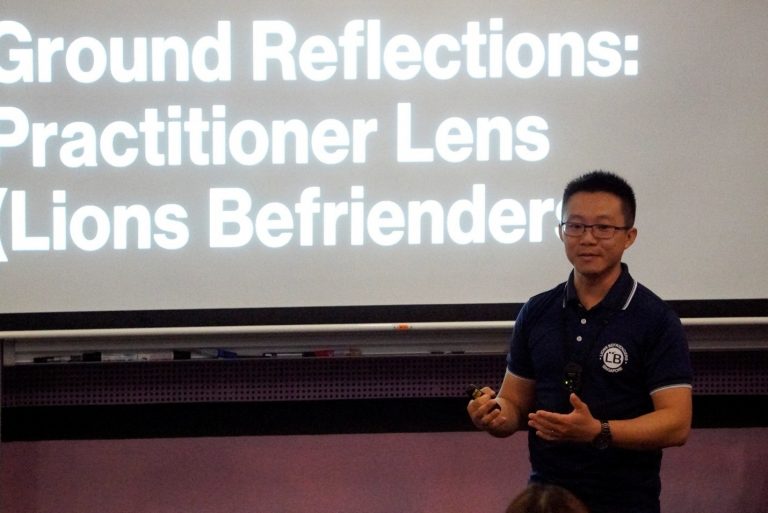
Community partner Mr Jeremy Mok shared his on-the-ground expertise in engaging residents across mixed housing precincts to foster greater social ties, reciprocity, and care.
Learn more about LKYCIC’s research on how interactions, design, and lived rhythms shape social cohesion here.
Building a Climate-Resilient Citizenry through Engaged Communities, Engaged Research, and the 3P+ Framework
The third session saw Dr Harvey Neo, Professorial Research Fellow, LKYCIC, presenting insights from the Climate‑Resilient Citizenry and Staying Cool projects, supported by the Social Science Research Council and Tote Board, and developed with partners across NUS, the Singapore ETH Centre, and SMU. These projects ask how climate awareness can be transformed into sustained everyday action. While many recognise climate risks, this does not always translate into long‑term behavioural change. Dr Neo explained that this gap stems from three persistent disconnects: climate change feels too big in scale, too far in the future, and too distant from daily life, weakening both care and agency.
Building on this, Dr Neo introduced the 3P+ framework, which brings together People, Public, and Private sectors, with Academia serving as moderator, translator, evaluator, and trust builder. This approach underpins both projects, centres lived experience, and positions communities as partners in shaping solutions. Urban heat was used as the empirical entry point because it is immediate and widely felt in Singapore. Evidence from population surveys, ethnographic profiling, and citizen dialogues shows that when heat is made tangible at the household level, individual agency strengthens, especially when framed through cost and health concerns. These insights informed two pilot interventions: a visual toolkit that helps households reflect on cooling practices, and a climate‑adaptive renovation guide designed for key life transitions, with trials planned for later this year.
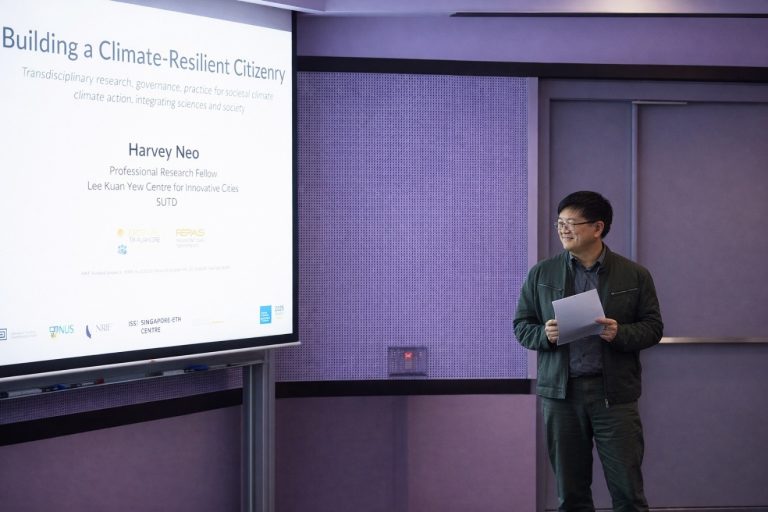
Dr Harvey Neo illustrated how the team moved from understanding lived experiences to co‑developing practical, community‑anchored climate interventions.
Dr Neo emphasised that building a climate‑resilient citizenry requires translation, engagement, and partnerships that make climate action practical and durable in everyday life.
Learn more about LKYCIC’s research on climate change adaptation and urban environmental resilience here.
Panel Discussion
The seminar concluded with a panel discussion, moderated by Professor Cheong, which brought together diverse perspectives on what urban resilience means in practice.
Mr Tony Tan, Chief Corporate Officer of CapitaLand Development, opened by sharing the perspective of a commercial real estate player, framing resilience through environmental sustainability, operational efficiency, and community stability. He stressed that people remain the common denominator of resilient cities.
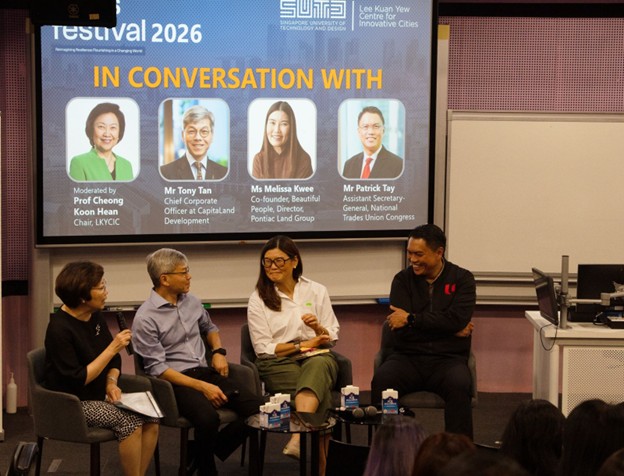
Panellists sharing their perspectives and insights on what urban resilience looks like on the ground.
Ms Melissa Kwee, Co‑founder of Beautiful People and Director of Pontiac Land Group, then shifted the conversation to the relational foundations of resilience, highlighting hope, dignity, and neighbourliness as essential building blocks. Drawing on initiatives such as Queenstown Kakis and WalkWithYou, she called for a move beyond transactional giving towards long-term shared ownership of the community.
Addressing workforce resilience amid rapid technological change, Mr Patrick Tay, Assistant Secretary-General of the National Trades Union Congress, underscored the importance of retraining, tripartite cooperation, and job redesign in enabling a just transition.
Together, the panel emphasised a central message: urban resilience is not only about infrastructure and technology, but also about adaptability, inclusion, and sustaining human connection in times of change.
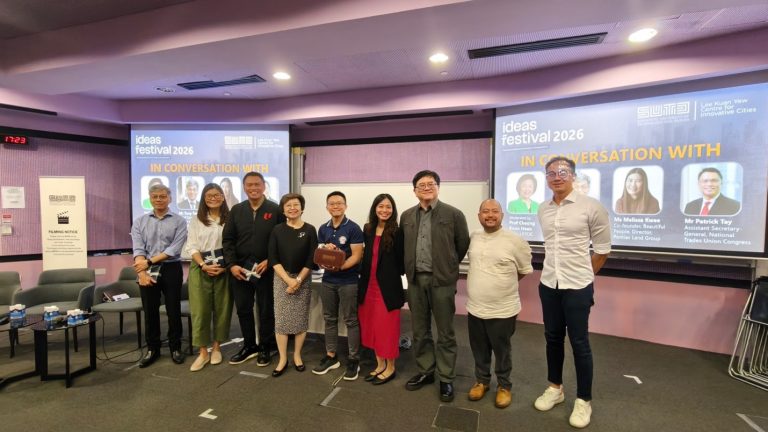
Group shot with all the speakers and panellists.

Audience at the event.