Research news

Teaching underwater stingray robots to swim faster and with greater precision using machine learning
Researchers developed a new approach to model the dynamics of underwater stingray-like robots, enabling more efficient swimming in complex underwater environments.
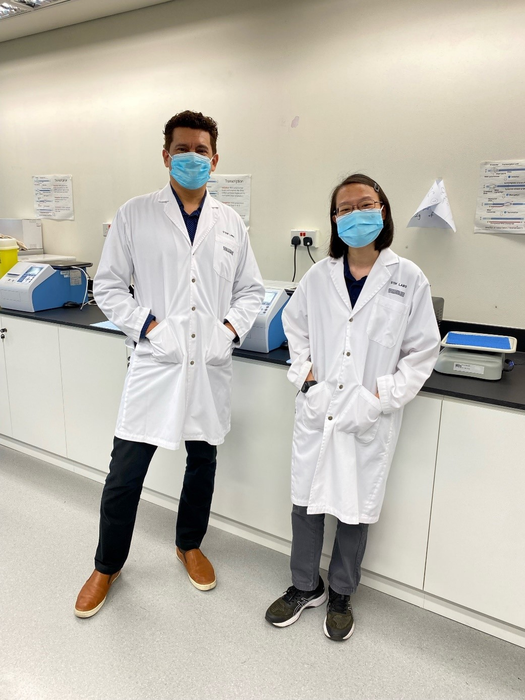
SUTD develops design-based activity to enhance students’ understanding in electrochemistry
The electrochemistry designette enables students to visually demonstrate their proficiency in electrochemistry, and allows for instructors’ quicker intervention when misconceptions arise.

What is a conductive Nernst Equation, and how will it transform technology? – A 133-year electrochemical conundrum
Researchers developed first principles-based charge transport equations for electrode-electrolyte current modelling.
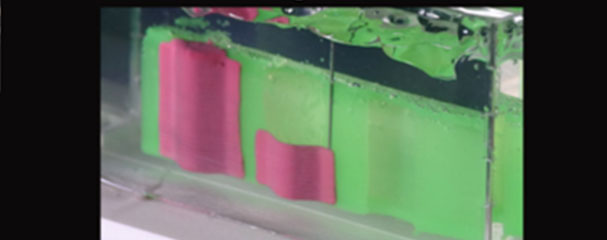
SUTD unlocks new method to 3D print complex, functional components for soft robotics
With the enhancement of Freeform Liquid 3D Printing, engineers and designers are now able to fabricate more intricate, yet stronger 3D printed soft robots.
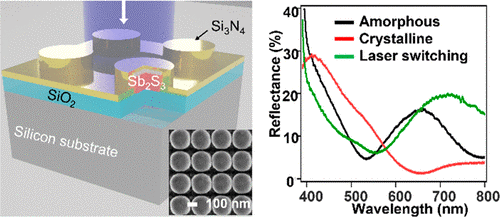
SUTD sets its sights on chalcogenide nanostructured displays
An Earth abundant material, antimony trisulphide, shows potential for high resolution video displays.

SUTD researchers developed DIY 3D-printed peristaltic pump kits for microfluidics
SUTD researchers developed a highly-customisable, 3D-printed peristaltic pump kit.

SUTD researchers developed simple method to upcycle okara using 3D printing
Okara, a soybean byproduct, can now be 3D printed without any additives, boosting food sustainability efforts.
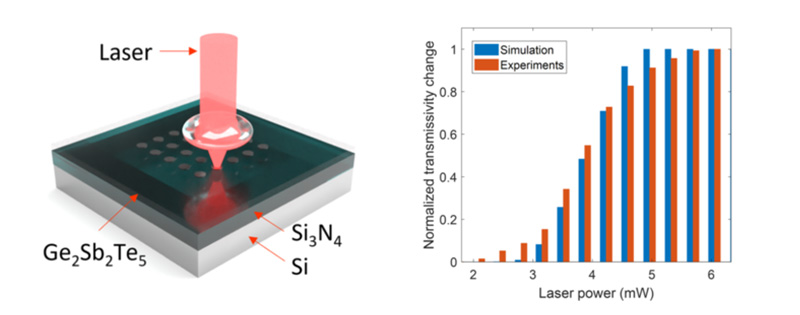
Advancing photonics materials with cellular automation
Researchers are applying cellular automation to efficiently model phase change materials with multiple optical phases for next-generation photonics devices.

Precise acousto-electric sorting of submicron cell-secreted extracellular vesicles
The novel acousto-electric sorting technology by SUTD provides a promising solution for segmenting extracellular vesicles subtypes by generating simultaneous acoustic and electric force fields, providing a fundamental tool for clinical research.

How robots can tell how clean is ‘clean’
By giving the touch-and-inspect method a smart update, SUTD researchers have designed a sensor for autonomous cleaning robots that can quantify the cleanliness of a given area.