Research news

SUTD develops intelligent model simulator that maps complex phenomena of memristor memory
SUTD led in the development of an intelligent model simulator that predicts complex phenomena of memristor memory to enable the production of a cheaper faster memory.
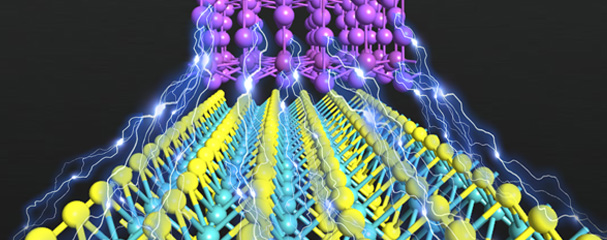
Boosting Energy Efficiency of 2D Material Electronics using Topological Semimetal
SUTD researchers discover a new way to boost the energy efficiency of 2D semiconductor electronics by synergizing 2D materials and topological semimetals.
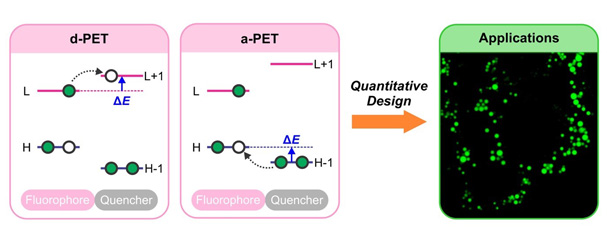
General Descriptor Sparks Advancements in Dye Chemistry
SUTD collaborates with international researchers to move away from inefficient trial-and-error developments in dye chemistry and quantitatively design luminescent materials.
To Make an Atom-Sized Machine, You Need a Quantum Mechanic
Here’s a new chapter in the story of the miniaturisation of machines: researchers in a laboratory in Singapore have shown that a single atom can function as either an engine or a fridge.

The four horsemen of the COVID-19 pandemic
It is clear that we must prioritize identifying and alleviating the conditions that made the Covid-19 pandemic possible. Even as it rages, scientists are already asking if it is more than just a virus, but rather a symptom emerging from something much deeper.

The paradox of dormancy: Why sleep when you can eat?
Why do predators sometimes lay dormant eggs — eggs which are hardy, but take a long time to hatch, and are expensive to produce?
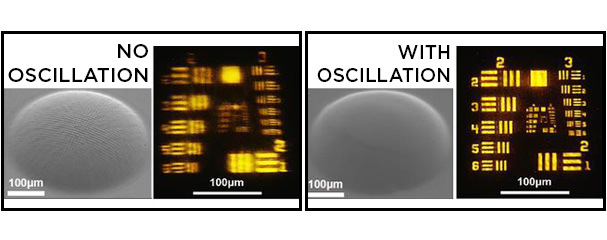
Oscillation assisted 3D printing renders ultrafast fabrication of microlens array
Researchers from SUTD and SUSTech proposed an approach which integrated oscillation-assisted DLP 3D printing with grayscale UV exposure to render an ultrafast and flexible fabrication of microlens arrays with optical surface smoothness.
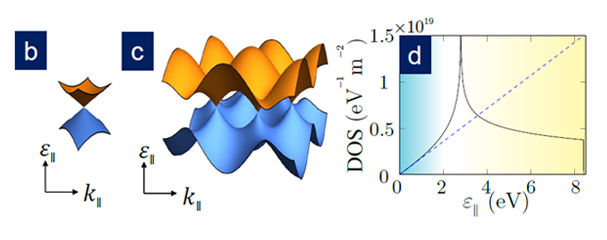
SUTD Physicists Unlock the Mystery of Thermionic Emission in Graphene
Without relying on the Dirac cone approximation, this new thermionic emission model allows a wide array of graphene-based devices operating at different temperatures and energy regimes to be universally described under a single framework
Researchers demonstrate three-dimensional quantum hall effect for the first time
The three-dimensional quantum Hall effect was predicted more than 30 years ago, but has not been observed until now by the Singapore University of Technology and Design together with international researchers.
Paradoxical Survival: Examining the Parrondo effect across biology
“Every cell, organism and species, and species assemblage and ecosystem, is necessarily mortal, yet the biosphere persists,” said Assistant Professor Cheong.