Research news
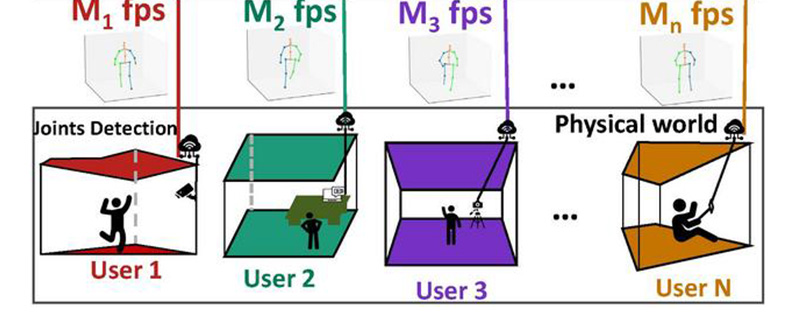
Smooth avatar-user synchronization for the metaverse
What if, instead of incorporating technology into our physical world, we assimilate ourselves into a virtual environment? This is what Assistant Professor Xiong Zehui hopes to achieve in his research.
How curiosity sparked pioneering research
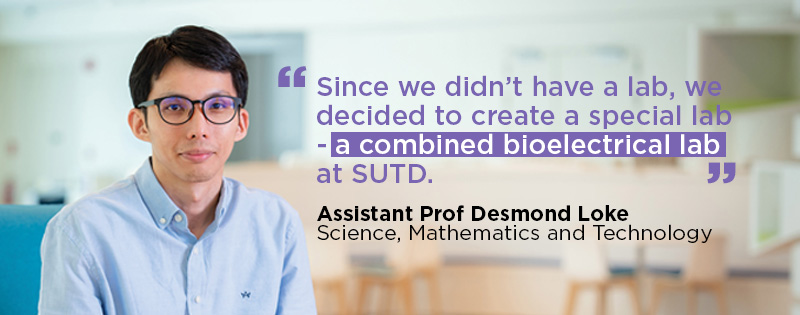
While working alongside cancer research groups during his postdoctoral studies, Assistant Professor Desmond Loke became intrigued by the possibility of extending the application of his electronic devices to cancer studies.
SUTD researchers leverage novel nanotechnology to control cells over long periods
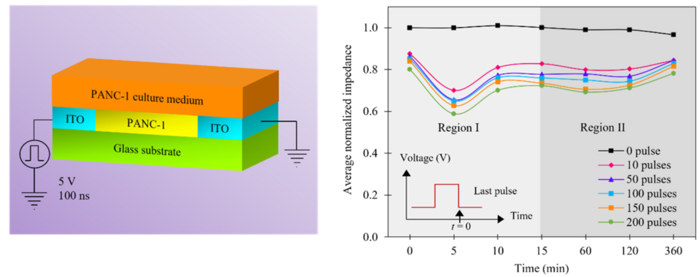
A version of the nanosecond electroporation platform has been developed by researchers from SUTD and A*STAR Bioinformatics Institute. The platform allows pores to remain open for 10 times longer than that achieved in current systems.
A butterfly’s first flight inspires a new way to produce force and electricity
The wings of a butterfly are made of chitin – SUTD researchers uncover the promising capability of chitin as a sustainable smart biomaterial.

Bilingualism as a catalyst for social development in children
Through this research, Assoc Prof Yow aims to develop ideas on ways to embrace language diversity, with the ultimate goal of harnessing the advantages of bilingualism to improve the developmental and educational outcomes for children from all walks of life.

2D Nanosheets for Sustainable Carbon Capture
SUTD and A*STAR researchers produced an energy-efficient technique to rapidly synthesise 2D mica nanosheets for effective carbon dioxide capture.
Chip-based dispersion compensation for faster fibre internet
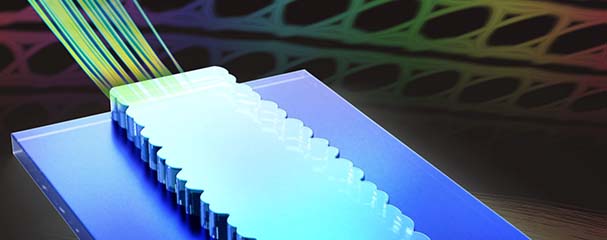
SUTD scientists developed a novel CMOS-compatible, slow-light-based transmission grating device for the dispersion compensation of high-speed data, significantly lowering data transmission errors.

Keeping Your Backdoor Secure
SUTD researchers developed AEGIS, the first and only technique that is able to detect backdoor attacks in robust machine learning models.

Novel intrinsic transport effect unlocks potential nonlinear applications
A never-before-observed phenomenon in electron transport – the intrinsic nonlinear planar Hall effect – could translate to useful applications in electronics.
Stretchable knee wearable offers insight into improving e-textiles for healthcare
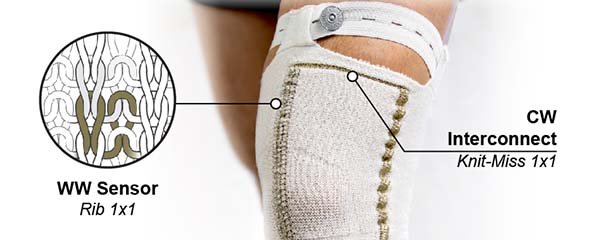
SUTD researchers developed a fully knitted, circuit-embedded knee wearable for wireless sensing of joint motion in real-time. Compared to other knitted electronics, this model has fewer externally integrated components and a more sensitive sensor, making it less error-prone.