
Jordan: R&D Operational Planning Engineer
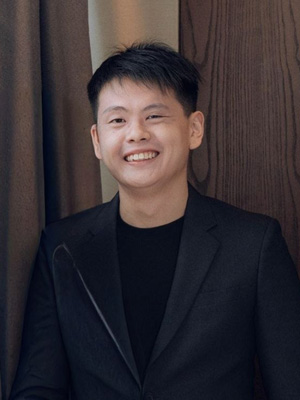
Jordan Lim
Class of 2025, Engineering Systems and Design
R&D Operational Planning Engineer, Micron
Sometimes, the opportunities you least expect can become the most rewarding ones.
When I was studying Engineering Systems and Design (ESD) at the Singapore University of Technology and Design (SUTD), I imagined myself working in a role that involved data, optimisation and problem-solving. What I did not expect was that those interests would eventually lead me into the manufacturing industry.
Today, I work as an R&D Operational Planning Engineer at Micron, supporting the development of next generation NAND memory technology. Looking back, my experience has shown me that data science and manufacturing are far more connected than many students realise.
My job
I am part of Micron’s Technology Development (R&D) organisation, specifically within the operational planning team. Our team focuses on planning activities that support the development of new semiconductor
products.
My role involves working closely with different teams, including process integration, process development and engineering functions. I act as a bridge between these groups to ensure that our R&D products move efficiently through the development process. On a day-to-day basis, I analyse operational data and monitor key performance indicators such as cycle time, cost and operational efficiency. My goal is to ensure that new products stay on schedule, remain cost-efficient and can be introduced to the market as quickly as possible.
One thing that surprises me about this role is how data-driven it is. Data analysis forms the foundation of much of my work. However, generating insights is only part of the job. I also spend a significant amount of time presenting findings and recommendations to stakeholders, including senior leaders, to support decision-making.
How I started
What attracted me to this role is the opportunity to be part of Micron’s R&D pilot line in Singapore. The idea of contributing to cutting-edge innovation and helping to develop future products is incredibly exciting to me.
As an ESD student, I was always interested in optimisation and using data to solve complex problems. When I learned that this new R&D team would be responsible for developing products from research and development all the way through to manufacturing, I saw enormous opportunities to apply data-driven thinking in a meaningful way.
Importantly, I had no prior experience in manufacturing before joining Micron. What I brought with me were transferable skills: analysing data, solving problems systematically, thinking from a systems perspective and using data to support decisions. These skills turned out to be highly relevant in the manufacturing environment.
In fact, one of the biggest lessons I have learned is that manufacturing today relies heavily on data. Whether we are optimising operational performance, reducing costs or improving efficiency, data is at the centre of many decisions we make. For students studying data science, analytics or related disciplines, manufacturing offers far more opportunities than you might expect.
The highs and lows
One of the biggest challenges I faced as a fresh graduate was learning how to communicate effectively with senior stakeholders.
I was comfortable analysing data and identifying trends, but presenting insights to directors and vice presidents was something I had very little experience with. Early on, I realised that producing good analysis was not enough. I also needed to communicate the key messages clearly, organise information effectively and help leaders quickly understand what actions should be taken.
At first, this was intimidating. However, I gradually changed my mindset and stopped viewing these experiences as low moments. Instead, I began seeing them as opportunities to learn and grow.
Every presentation became a chance to improve my communication skills and become more confident in engaging senior leadership.
Looking back, I am grateful for those challenges because not many engineers get regular exposure to senior leaders so early in their careers. The experience has accelerated my development in ways that I never expected.
My happiest moment at work
One of my proudest moments happened shortly after I joined Micron.
About a week into my role, our R&D pilot line began operating. At the time, I was one of the first local members of the team, while many of my colleagues and mentors were still based in the United States. Despite the steep learning curve, we successfully achieved a major project milestone and delivered our first pilot-line output on schedule.
That achievement gave me a strong sense of accomplishment, especially because we overcame significant challenges and tight deadlines along the way.
Over time, however, my definition of success has evolved. Today, my happiest moments do not necessarily come from major project milestones. Instead, I find satisfaction in continuous learning. Whether it is discovering a new way to automate tasks using artificial intelligence, learning a new analytical technique, gaining fresh perspectives from colleagues or finding a better solution to a problem, these daily learning experiences have become the most rewarding part of my work.
Some advice
If I could share one piece of advice with students and fresh graduates, it would be to keep an open mind.
When I was job searching, I started applying for positions early and spent months exploring different opportunities. To be honest, I never imagined that I would end up working in the manufacturing sector. Yet this opportunity turned out to be one of the best learning experiences I could have asked for.
My advice is not to focus solely on the industry. Instead, pay attention to the role itself. Ask yourself what skills you will gain, what exposure you will receive and how the experience will help you grow. Learning opportunities often matter more than finding the “perfect” role/position, especially in your first job.
For students studying data science, analytics or systems-related disciplines, do not rule out manufacturing. Modern manufacturing companies generate enormous amounts of data and need people who can analyse information, optimise processes, communicate insights and drive better decisions. The skills you learn in data science can be highly valuable in this environment.
My own journey is proof of that. I entered the industry without a manufacturing background, but by applying the data-driven mindset I developed at SUTD, I found a role where I can contribute to innovation while continuing to learn every day. So, trust the process, stay curious and keep an open mind. Sometimes, the opportunities you least expect can become the most rewarding ones.