
Advanced multi-material silicone 3D printer
Technology title
Advanced multi-material silicone 3D printer
Technology overview
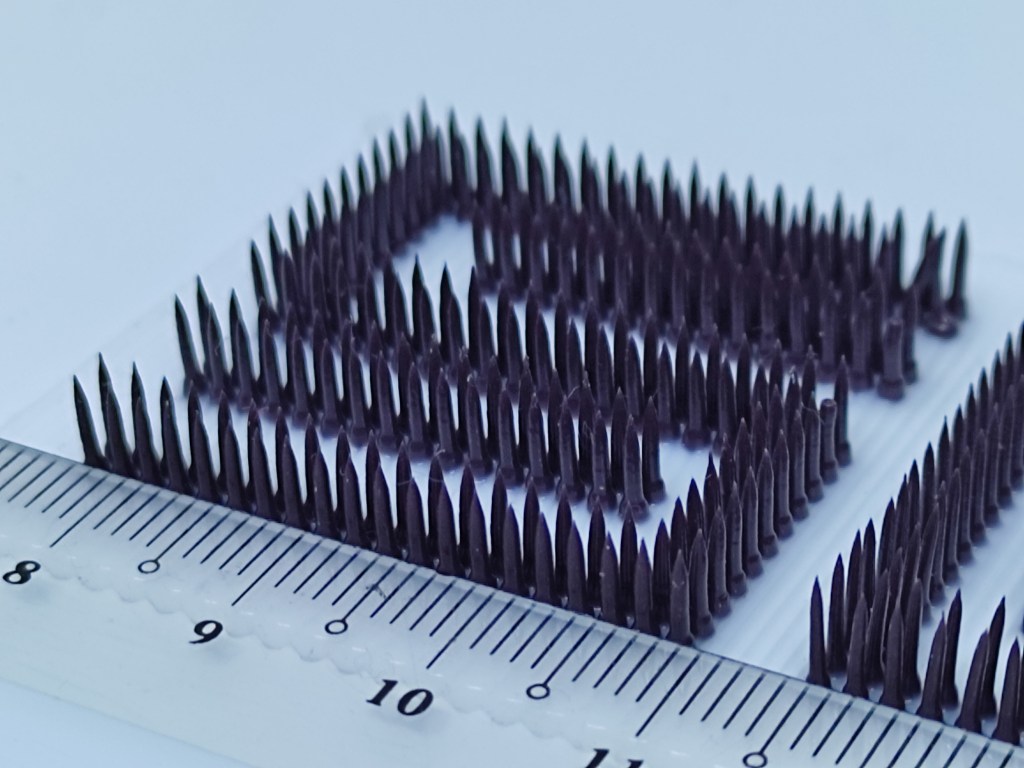
The Advanced Multi-Material Silicone 3D Printer addresses these challenges by enabling 3D printing with a wide range of materials, from soft elastomers to hard epoxies. This technology produces high-resolution geometries with customisable mechanical properties. It enables the fabrication of hollow structures and advanced textures without the need for molds or multistep processes. It resolves a significant pain point in the production of intricate, flexible components by reducing production time and expanding the range of printable materials. By bridging a critical gap in the market, this technology and its IP offers a flexible, multi-material 3D printing solution that delivers both performance and efficiency.
Technology specifications
- Multi-material 3D printing: 3D print with a wide range of materials, from soft elastomers to hard epoxies, offering greater versatility in applications.
- Direct ink writing (DIW): printing with support gels enables the fabrication of intricate, high-resolution geometries, including hollow structures and flexible components.
- Automated fiber embedding (AFE): enhanced mechanical properties of printed objects through seamlessly embedding fibers during the printing process.
Sector
Healthcare, soft robotics, fashion, wearable technology, consumer goods, and automotive.
Market opportunity
The market for multi-material 3D printing, particularly in sectors like healthcare, soft robotics, fashion, and consumer goods, is rapidly growing. The global 3D printing market is expected to reach $83.9 billion by 2029, with a CAGR of 24.3%. The silicone 3D printing market, which aligns closely with this technology, is projected to grow to $1.9 billion by 2029.
This technology is attractive to the market due to its ability to support multi-material printing, integrate continuous fibers, and create complex geometries with minimal post-processing. Its versatility across various industries, such as custom healthcare devices, soft robotics, and wearable technology, provides significant value in prototyping, customization, and high-mix, low-volume production. By enabling advanced functionalities, reducing production time, and expanding design possibilities, this technology addresses the industry’s need for more flexible, efficient, and innovative additive manufacturing solutions.
Applications
Healthcare applications include the creation of custom prosthetics, orthotics, and implants with tailored mechanical properties and biocompatible materials. The ability to embed fibers enables the fabrication of wearable sensors and medical devices that are flexible, durable, and responsive.
In soft robotics, this technology allows for the production of inflatable structures, actuators, and grippers with complex geometries and integrated functionality, making them ideal for use in automation, assistive devices, and robotics research. Wearable technology and smart textiles can benefit from the ability to print directly on fabrics, enabling the creation of smart clothing with integrated sensors, communication systems, and responsive elements, as well as aesthetic enhancements for fashion.
The consumer goods sector can use this technology to produce customised cushions, mouse pads, and small appliances, while the automotive industry can use it to develop custom parts for interior and exterior components. The ability to produce high-mix, low-volume products makes it ideal for industries requiring rapid prototyping, customisation, and short-run manufacturing, ensuring flexibility and reduced time-to-market.
Customer benefits
This advanced multi-material 3D printing technology gives you the freedom to create stronger, more complex, and highly functional parts in a single step. From soft elastomers to tough epoxies and continuous fibers, it delivers enhanced performance while cutting production time, post-processing, and costs. With the ability to print intricate structures and even integrate directly onto textiles, it unlocks new possibilities for smart, durable, and innovative products in healthcare, robotics, and wearables.
Technology readiness level
TRL 4
Ideal collaboration partner
Ideal collaboration partners across the value chain include companies in automation, robotics, manufacturing, medical devices, and wearable technology.
Collaboration mode
We are happy to provide R&D collaboration, IP licensing and test-bedding as required by the potential customers.