Events
Heritage conservation, the commercial imperative, and Singapore’s placemaking – The case of Kampong Gelam
This talk examines Kampong Gelam’s transformation from historic neighbourhood to managed heritage-tourism district, tracing three key phases.
Why People Act During Extreme Heat: Motivation, Capability and Urban Opportunity
Why do people protect themselves from extreme heat, and why do intentions not always translate into action? This seminar examines urban heat adaptation through the COM-B framework, with particular attention to motivation: risk perceptions, concern, attitudes, intentions and self-efficacy.
Support for Climate Change Mitigation vs. Adaptation Policies: A Construal Level Theory Perspective
Countries need to both mitigate climate change and adapt to it, but limited resources mean one may get prioritised over the other. This research asks why, and finds that mitigation is seen as more desirable (having a more attractive goal, with global benefits), while adaptation is seen as more feasible (being easier to act on, with localised benefits).
Climate Justice and Mental Health in the Global South: Perspectives and Experiences in the Philippines
This lecture explores how environmental inequalities shape psychological experiences across the Global South, where communities often face the greatest climate risks despite contributing least to the crisis.
Urban Colour: Local Identity and Planning Guidelines
This talk examines urban colour not as surface decoration, but as a structured system shaped by nature, culture, and urban development over time.
From Water Sensitive Urban Design to Water Sensitive Communities: Insights from Singapore, Seoul and Zurich
Nature-based solutions require community stewardship to thrive. Discover key insights on water-sensitive urban design in Singapore, Seoul, and Zurich.
Redesigning Work in the Era of AI and Automation: A Skills-First, Human-Centric Approach
Grounded in extensive organisational practices, this session introduces a structured, human-centric, and skills-first approach to identify how functional tasks can be automated, augmented, or reorganised, and how jobs can be reconstructed into higher-value, future-ready roles.
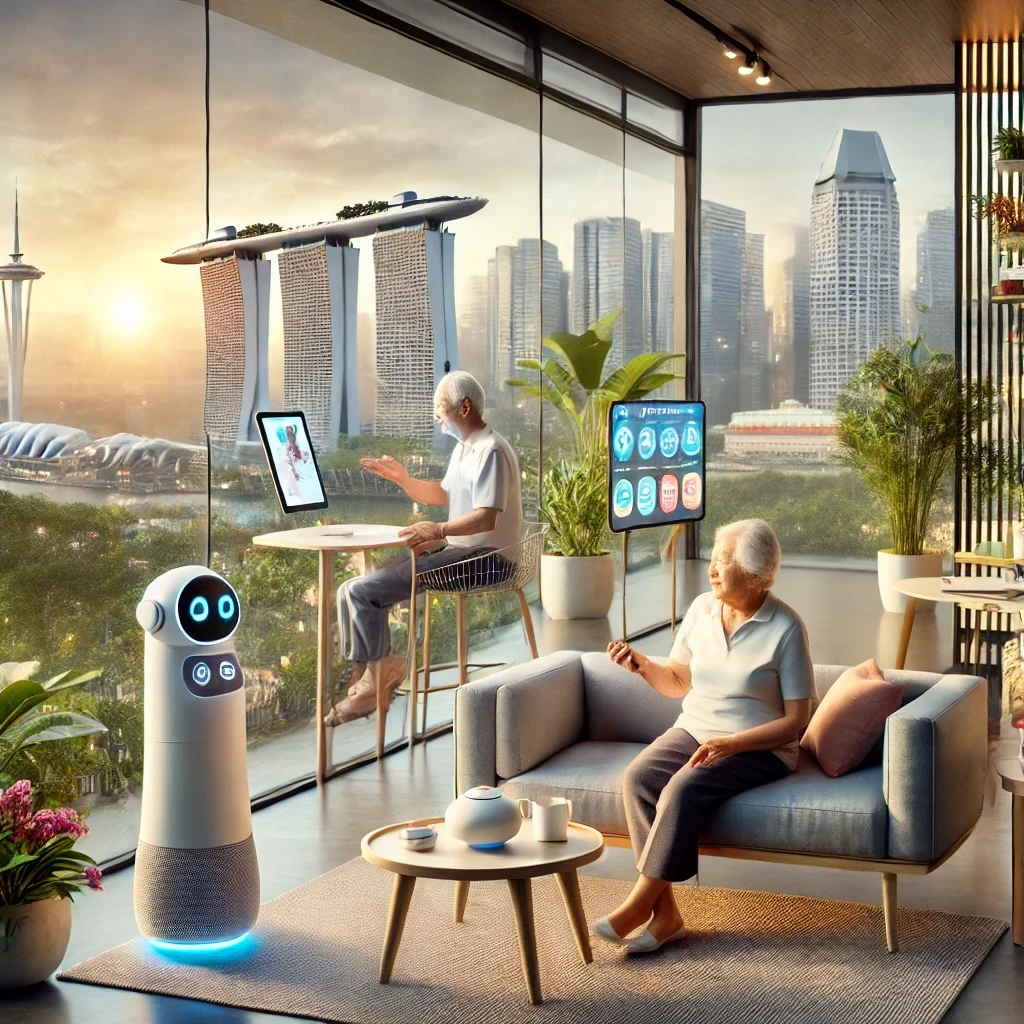
Digitalisation & Everyday Life Activities Exhibition
Explore how digitalisation shapes the everyday lives of older adults in Singapore’s Outram Planning Area, featuring real stories, photographs, and voices from older residents — reflecting their experiences with technology, from the conveniences it brings to the challenges it creates.
Metropolitan Dharma: Buddhism in Global-City Singapore
This talk traces the historical development and contemporary transformations of the Buddhist community in Singapore. Beginning in the nineteenth century, it examines how waves of migration from China, South Asia, and Southeast Asia produced a diverse Buddhist landscape encompassing Theravāda, Mahāyāna, and Vajrayāna traditions in a colonial port city.
Does the System Care? Accessibility, AI and the Difference Between Technical Compliance and Relational Safety
Accessibility systems worldwide are evaluated on compliance: does the ramp exist, does the lift work, is the route barrier-free? But compliance and care are not the same thing. This talk draws on fieldwork in Singapore to examine accessibility as a relational problem, not just an infrastructure one, and asks what happens when we apply this lens to AI.