What can quantum AI learn from biological intelligence?
9 Apr 2026
Designing scalable quantum machine learning (QML) models with potential quantum advantage on Noisy Intermediate-Scale Quantum (NISQ) devices remains a major challenge. We will first review how hardware noise and quantum chaos act as scalability barriers to QML algorithms on these devices. We will then present practical solutions designed to bypass these obstacles, thereby enabling the scaling of prototypical QML models, though with the trade-off of potential classical simulability. Alternatively, rather than eliminating uncontrollable environmental stochasticity or chaos, living systems evolve to embrace this ubiquitous unpredictability of natural environments. Drawing on two models of biological systems—neuronal networks and reinforcement learning in selfish populations—we will highlight biologically inspired information processing paradigms that are robust to noisy or chaotic environments. We will conclude by exploring fresh ideas that emerge from the cross-fertilisation of neuroscience, artificial intelligence, and quantum information science, asking what artificial and quantum models might learn from biological resilience, and vice versa.
Speaker’s profile
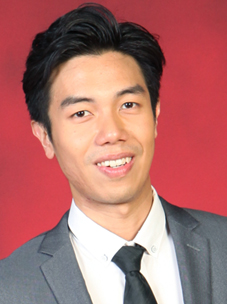
Thiparat received his PhD in theoretical physics under the supervision of David R. Nelson from Harvard University, focusing on statistical mechanics of evolutionary processes and biological pattern formation in disordered media. Then, he explored the intersection of statistical mechanics, machine learning, and neuroscience as a Postdoctoral Scholar at SUTD. He is currently an Assistant Professor of Physics at Chulalongkorn University. His research interests include quantum information science, statistical mechanics, and artificial intelligence from theoretical and computational perspectives. He received Chulalongkorn University’s 2025 Outstanding Researcher Award in Physical Sciences and Mathematics, and led quantum simulations and algorithms project under Thailand Quantum Flagship Research Program. He also holds visiting scholar appointments at institutions including EPFL (Switzerland), and KITP (Santa Barbara).
For more information about the ESD Seminar, please email esd_invite@sutd.edu.sg