
IEEE MRS 2025
MRS Young Pioneer speakers
Zhongqiang (Richard) Ren

Title
Multi-Robot Planning: From Structured to Unstructured Environments
Abstract
Multi-Robot Systems (MRS) arise in many applications ranging from warehouse logistics, smart manufacturing and search and rescue. MRS allows the robots to finish complicated tasks that are otherwise hard to achieve, however, at the cost of complicated planning and coordination. This talk focuses on planning for MRS. It begins with planning in structured environments such as warehouses and factories where infrastructures (such as Wi-Fi communication) and prior knowledge (such as maps) are usually available, and the goal is to develop multi-agent path planning algorithms with formal guarantees to find high-quality collision-free paths for many robots to transport materials subject to various constraints with real-world applications. Then, the talk shifts from structured environments to unstructured environments, where infrastructure or priori knowledge about the environments are unavailable, and discusses planning algorithms for information gathering with connectivity maintenance, exploration of unknown environments, and multi-robot collaboration in interactive environments.
Biography
Zhongqiang (Richard) Ren is an assistant professor at the Global College at Shanghai Jiao Tong University. Prior to that, he received his bachelor degree from Tongji University in China. He obtained his master and PhD from Carnegie Mellon University in USA, where he also served as a Post-doc. His research focuses on path and motion planning for multiple robots. His research has led to more than 40 publications in top journals and conferences in Robotics such as Science Robotics, T-RO, RSS, ICRA and IROS, and received best paper finalist awards in IEEE MRS 2023 and ICRA 2025.
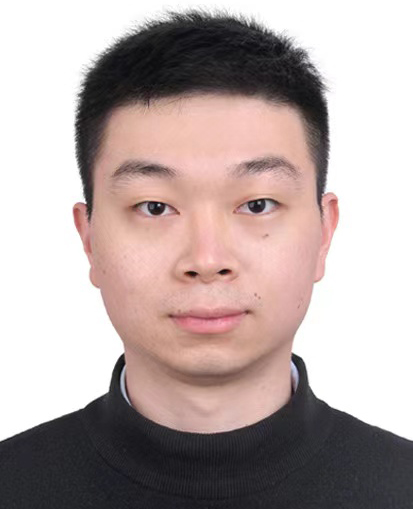
Bin-Bin Hu
Title
Towards the Flexibility for Swarm Robotics
Abstract
Employing the elegant and efficient collective behaviours observed in natural swarms has long been a compelling focus in the robotics community, offering promising solutions to challenges such as population growth, traffic congestion, and intelligent manufacturing. My research aims to enhance the flexibility of swarm intelligence to support a wide range of multi-robot applications. In the first part of this talk, I will briefly present how the guiding-vector-field algorithm, when combined with flexible coordination mechanisms, can achieve flexible ordering in traditional multi-robot path planning tasks. However, these algorithms only achieve flexibility but lack clarity on how to incorporate flexibility to boost overall efficiency, which motivates the second part of the talk, where I will briefly introduce a concurrent task allocation and execution optimization framework. This approach significantly reduces potential conflicts and improves efficiency by introducing flexibility. Finally, extensive simulations and experimental results demonstrate the efficiency of the proposed algorithms.
Biography
Dr Bin-Bin Hu is currently a postdoc at the University of Groningen under the supervision of Prof Ming Cao and Prof Bayu Jayawardhana. He obtained a PhD degree in control science and engineering from Huazhong University of Science and Technology, Wuhan, China, in 2022. From August 2022 to August 2024, he was a Research Fellow at Nanyang Technological University, Singapore. He was the recipient of the Excellent Doctoral Dissertation Award from the Chinese Association of Automation in 2023. His research interests include multi-robot systems, unmanned surface vehicles, and coordinated autonomous navigation.
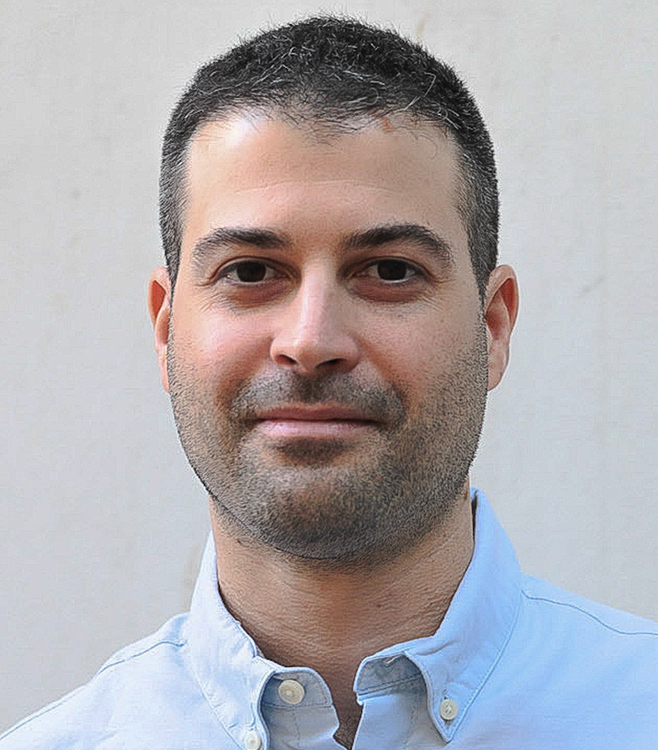
Roee M. Francos
Title
Resilient Decision-Making for Multi-Robot Systems in the Presence of Adversaries
Abstract
This talk presents a unified perspective on resilient decision-making for multi-robot systems operating in environments where adversaries may influence routing, search, and detection tasks. I will first introduce methods that ensure stable and time-efficient policies in large heterogeneous fleets that include both cooperative and adversarial agents, focusing on on-demand mobility applications where internal adversarial disruptions directly affect system dynamics. I will then describe how resilient cooperative search strategies can address challenges posed by intelligent, strategically coordinated external adversaries. These methods provide provable guarantees for coverage, detection, and robustness in demanding settings such as search and rescue and pursuit-evasion. I will conclude by outlining future research directions at the intersection of safety, learning, and large-scale autonomy. Across these domains, the talk highlights how resilient multi-agent decision-making enables reliable, efficient, and scalable autonomy in complex and adversarial environments.
Biography
Roee M. Francos is currently a Computer Science Postdoctoral Fellow at the Robotics, Embedded Autonomy, and Communication Theory (REACT) Lab at Harvard University focusing on development of multi-agent resilient decision-making and coordination algorithms. In 2023, he completed his PhD in Computer Science at the Multi-Agent Robotic Systems Laboratory at the Technion-Israel Institute of Technology. He received the BSc in Electrical and Computer Engineering from Ben-Gurion University. His research interests are in multi-agent teamwork, autonomous robotics, intelligent transportation systems, bio-inspired robotics and computer vision, focusing on collaborative algorithms for motion planning of autonomous vehicles, multi-robot learning, and air traffic management and coordination of unmanned vehicles. Roee is a recipient of the 2023 Robotics Science and Systems (RSS) Pioneers Award.
Mattia Catellani

Title
Small Views, Big Decisions: Multi-Robot Coordination Under Uncertainty
Abstract
Multi-robot systems are increasingly deployed in complex environments where sensing and motion are inherently uncertain. This presentation examines how robot teams can remain safe, coordinated, and effective when perception is limited and dynamics are not perfectly known. The first part focuses on coordination under anisotropic, cone-shaped fields of view, where substantial portions of the environment remain unobserved. A framework is introduced that models the uncertainty associated with undetected robots and enables each agent to make decisions based on its confidence in others’ estimated positions, ensuring safety and convergence even with partial information. The second part addresses uncertainty in robot dynamics, including external disturbances and modelling errors. Control strategies are presented that preserve safety and performance when real system behaviour diverges from the nominal model. Together, these results provide methods for robust and reliable multi-robot coordination in realistic operating conditions, where agents must function safely despite limited sensing and imperfect models.
Biography
Mattia Catellani received the BSc and MSc degrees in mechatronics engineering from the University of Modena and Reggio Emilia, Italy, in 2019 and 2022, respectively. He is currently pursuing a PhD degree in Industrial Innovation Engineering at the University of Modena and Reggio Emilia, Italy, and is expected to complete it in early 2026. His research focuses on multi-robot systems, distributed control, autonomous navigation and coordination with limited information, with primary emphasis on unmanned aerial vehicles.
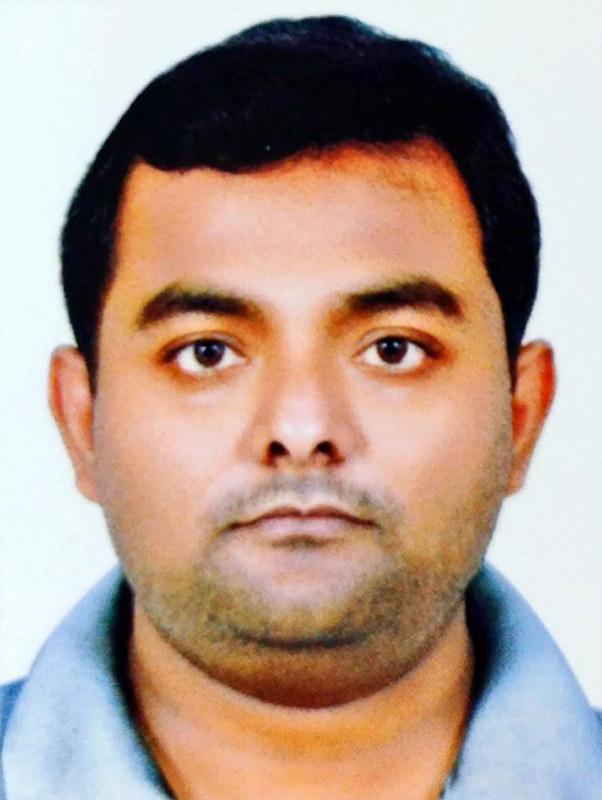
Dibyendu Roy
Title
Toward Trustworthy Collective Intelligence: Distributed Control, Adaptive Learning, and Self-Healing Coordination in Multi-Robot Systems
Abstract
This research advances distributed control and learning-enabled coordination frameworks for multi-robot systems (MRS), focusing on scalable formation control, cooperative behavior learning, and self-healing autonomy. The work develops region-based formation control architectures that enable flexible spatial organization, dynamic topology reconfiguration, and cohesive navigation in occluded, cluttered, and partially observable environments. These control strategies support robust operation under geometric constraints, environmental uncertainty, and heterogeneous team capabilities. To enable higher-level cooperation, the research integrates reinforcement learning–driven policy adaptation with world-model-based decision making, allowing teams to predict environment dynamics, generalise across tasks, and autonomously select appropriate collective strategies. The proposed framework supports context-aware role allocation, failure recovery, and formation reorganization without centralized supervision. A key emphasis is ensuring transferability and safety of learned behaviours through model-based planning, structured representations, and digital twin verification. Collectively, this work establishes the foundations for trustworthy collective intelligence in robotic swarms—teams capable of decentralized coordination, resilient adaptation, and reliable performance in dynamic industrial and field environments. The long-term vision is a unified learning–control architecture that provides transparent, verifiable, and scalable autonomy for heterogeneous multi-robot systems operating in real-world conditions.
Biography
Dibyendu Roy is a Principal AI Scientist/Engineer at ST Engineering, Singapore, specialising in distributed control, cooperative multi-robot systems, and learning-enabled coordination architectures. His research integrates decentralized control theory, reinforcement learning, and world-model-based decision making to develop autonomous, resilient, and self-healing robot teams capable of operating in dynamic and uncertain environments. Before joining ST Engineering, he was a Scientist at the Agency for Science, Technology and Research (A*STAR) Singapore, where he worked on intelligent navigation and AI-driven control strategies for multi-robot systems in manufacturing and logistics. He received his PhD in Engineering from Jadavpur University, where he developed region-based adaptive formation control techniques for swarm robotics. Roy has authored numerous publications in top robotics journals and conferences and holds multiple international patents in robotics, sensing, and biomedical systems.