

Digitalisation and Everyday Life Activities: Ageing with AI Exhibition
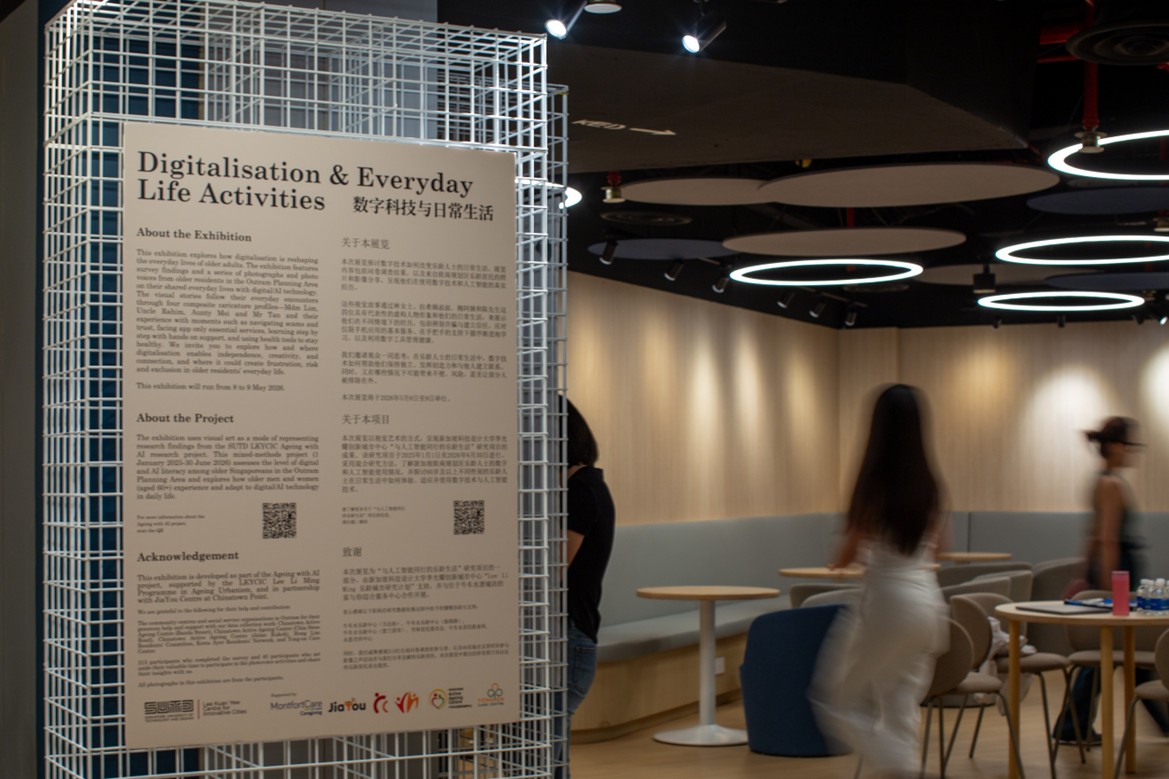
How is digitalisation reshaping the everyday lives of older adults? This question drove the exhibition Digitalisation and Everyday Life Activities, held on 8 and 9 May 2026 at Chinatown Point’s JiaYou Centre. This exhibition was developed as part of the Ageing with AI project, supported by the Lee Kuan Yew Centre for Innovative Cities (LKYCIC) Lee Li Ming Ageing Urbanism Programme, and in partnership with Montfort Care.
Understanding digitalisation through the lens of older adults
The Ageing with AI project, which runs from January 2025 to June 2026, explores how Singaporeans aged 60 and above encounter and adapt to digitalisation in daily life.
This exhibition brings together photographs, videos, personal stories, and survey findings from older residents in the Outram Planning Area. Their experiences reveal what digitalisation actually feels like in everyday life—firsthand knowledge of being curious, cautious, frustrated, and resourceful, sometimes all at once. These experiences were summarised through four composite characters: Mdm Lim, Uncle Rahim, Aunty Mei, and Mr Tan. Each figure drew on the collective stories of the research participants to illuminate four recurring themes:
- Trust and Security: The barrier is often not ability, but confidence. Fear of irreversible mistakes and scams keeps many from using tools they are already familiar with.
- Access Barriers: When services go app-only or cashless-only, older adults are pushed into digital systems with little support and less control in the matter.
- Social Support: From patient, one-to-one guidance to broader support ecosystems like Active Ageing Centres, social infrastructure is essential in building confidence for digital adoption.
- Healthy Ageing: Health is one of the most natural entry points into digital life. Technology earns its place when it serves a clear, personal purpose for older adults.
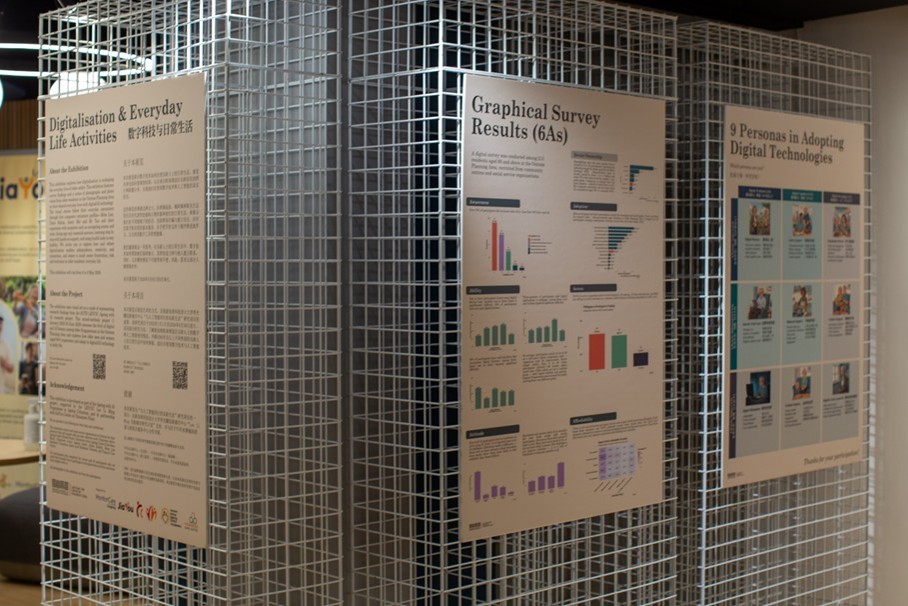
Findings from the photovoice component of the project were complemented by results from the digital survey, summarising the digital and AI experiences of older adults across a 6As framework: Adoption, Awareness, Ability, Access, Attitude, and Affordability. One finding showed that high smartphone ownership (about 9 in 10 of survey participants) does not automatically translate into digital adoption in everyday life. The most common uses of digital technologies are for communication and videos (75.1%). Mobile banking (26.3%), online shopping (7.5%) and AI-based tools (4.7%) see limited adoption.
Exhibition reception
The two-day exhibition welcomed 258 visitors. Research team members offered guided walkthroughs, facilitated a live voting segment, and conducted post-exhibition surveys that invited visitors to share their digital experiences and concerns.
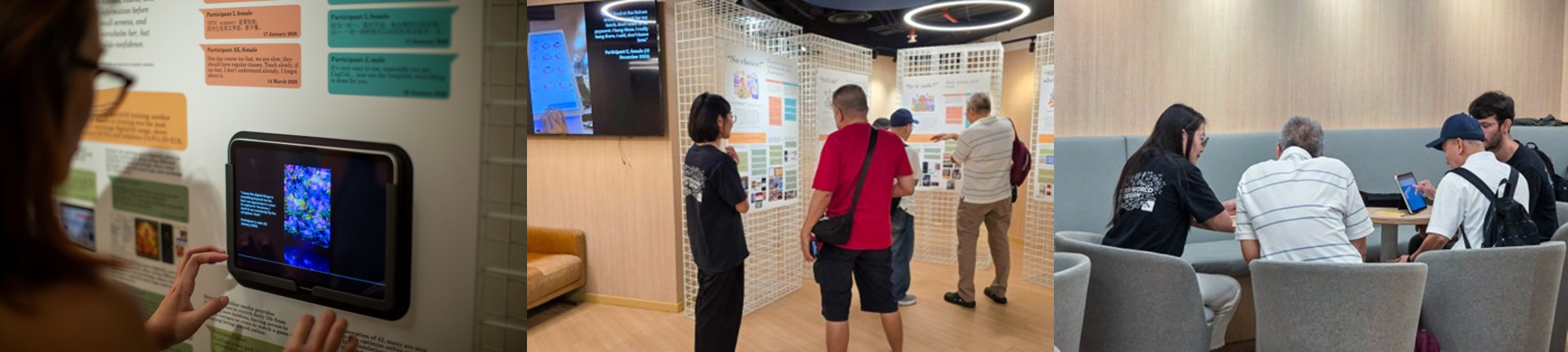
Among the visitors were many familiar faces — the research project participants themselves. They were glad to see their personal stories displayed in an exhibition setting and described feeling genuinely “seen” and “heard” by the research. This sentiment was echoed by other visitors, including visitors from the private sector and academia, reinforcing the need to recognise the challenges and opportunities of digitalisation and ageing as well as to showcase how older adults adopt and adapt in an increasingly digital society.
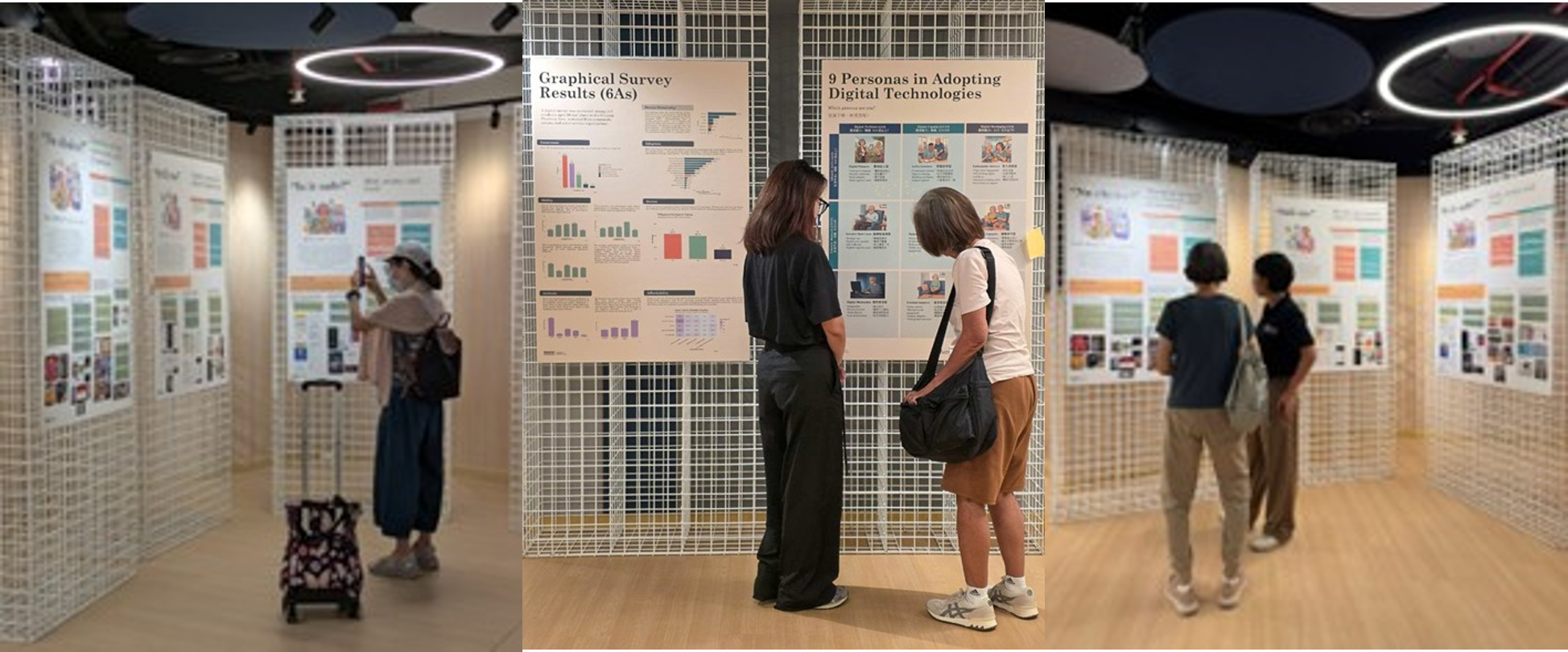
As the project nears its conclusion in June 2026, these shared stories convey a clear message: Building a truly inclusive Smart Nation means ensuring that older residents feel safe, supported, and autonomous in adopting digital tools.
We would like to once again thank our 213 survey participants, 40 photovoice participants, and community partners across Outram — the Chinatown Active Ageing Centre (Banda Street), Chinatown Active Ageing Centre (Chin Swee Road), Chinatown Active Ageing Centre (Jalan Kukoh), Hong Lim Residents’ Committee, Kreta Ayer Residents’ Network, JiaYou Centre at Chinatown Point, and Yong-en Care Centre.