

From Mobility to Regeneration: LKYCIC Researchers Share Insights at World Cities Summit 2026
From Mobility to Regeneration: LKYCIC Researchers Share Insights at World Cities Summit 2026
How can cities support healthier lives, stronger communities, and more regenerative futures?
At the World Cities Summit (WCS) 2026, researchers from LKYCIC and the SUTD’s Architecture and Sustainable Design pillar explored this question through presentations on mobility, health, and regenerative urban development. Across three sessions, they highlighted a common message: creating better cities requires looking beyond infrastructure and efficiency to focus on people’s everyday experiences, wellbeing, and social connections.
Through discussions on mobility behaviour, health-enabling neighbourhoods, and regenerative urban systems, the presentations demonstrated how interdisciplinary research can help cities become more liveable, resilient, and future-ready.
Beyond Infrastructure: The Human Side of Mobility
At the Cities for People: Reimagining Mobility for People session organised by the Land Transport Authority (LTA), Research Assistant Professor Samuel Chng challenged the assumption that travel decisions are driven solely by cost, speed, and efficiency.
Drawing on LKYCIC’s research in Phnom Penh as part of the Cities and Urban Science Programme, he highlighted how commuters often choose routes based on factors such as shade, safety, attractiveness, and opportunities for social interaction. The findings suggest that mobility systems should not only move people efficiently, but also support positive everyday experiences.
The presentation also emphasised that mobility enables people to access opportunities, maintain relationships, and participate in community life. As cities become denser and lifestyles increasingly individualised, transport nodes and neighbourhood spaces can play an important role in fostering wellbeing, social connection, and community resilience.
Using the VIASTA! Project that is under the Centre’s DesignZ Positive City Lab he illustrated how underutilised spaces can be transformed through community participation, creating places that strengthen social ties while enhancing everyday mobility experiences.
Ultimately, the session highlighted the need to rethink mobility as more than movement. Transport systems shape how people experience cities, connect with others, and access opportunities, making them an important contributor to urban wellbeing.
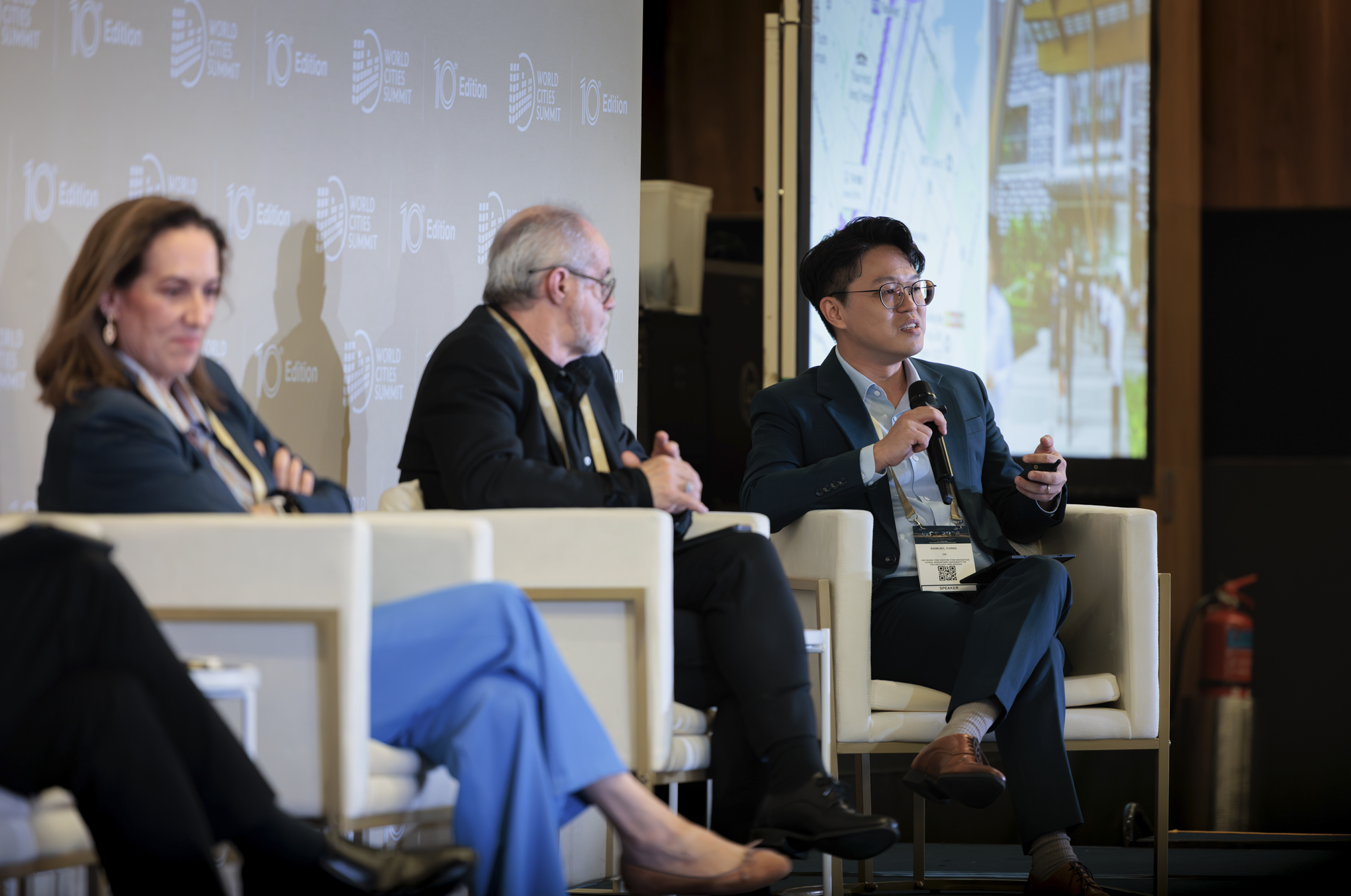
Research Assistant Professor Samuel Chng sharing LKYCIC’s research insights at the Cities for People: Reimagining Mobility for People session at World Cities Summit 2026.
Beyond Proximity: Planning for Health and Everyday Life
A second presentation by Research Assistant Professor Samuel Chng at the Future Urban Liveability: The Hyperlocal Shift session explored the relationship between mobility and health.
Drawing on emerging findings from LKYCIC’s research on Future Urban Liveability in the Urban Psychology Lab, the presentation reframed mobility not simply as a transport behaviour, but as a health behaviour. Everyday journeys generate opportunities for incidental physical activity through walking to public transport, workplaces, shops, schools, and community destinations.
The research suggests that people’s daily lives continue to operate across both neighbourhood and city scales, challenging planning approaches that focus solely on bringing destinations closer to residents.
Instead, the presentation argued that future hyperlocal planning should focus on creating environments that support healthy living and everyday wellbeing. This includes moving beyond static catchment-based thinking towards understanding daily rhythms, supporting opportunities for healthy lifestyles, and designing neighbourhoods that enable care, social connection, and quality of life.
The session highlighted an important shift in urban planning: from asking whether destinations are nearby to understanding whether neighbourhoods support people in living healthier and more fulfilling lives.
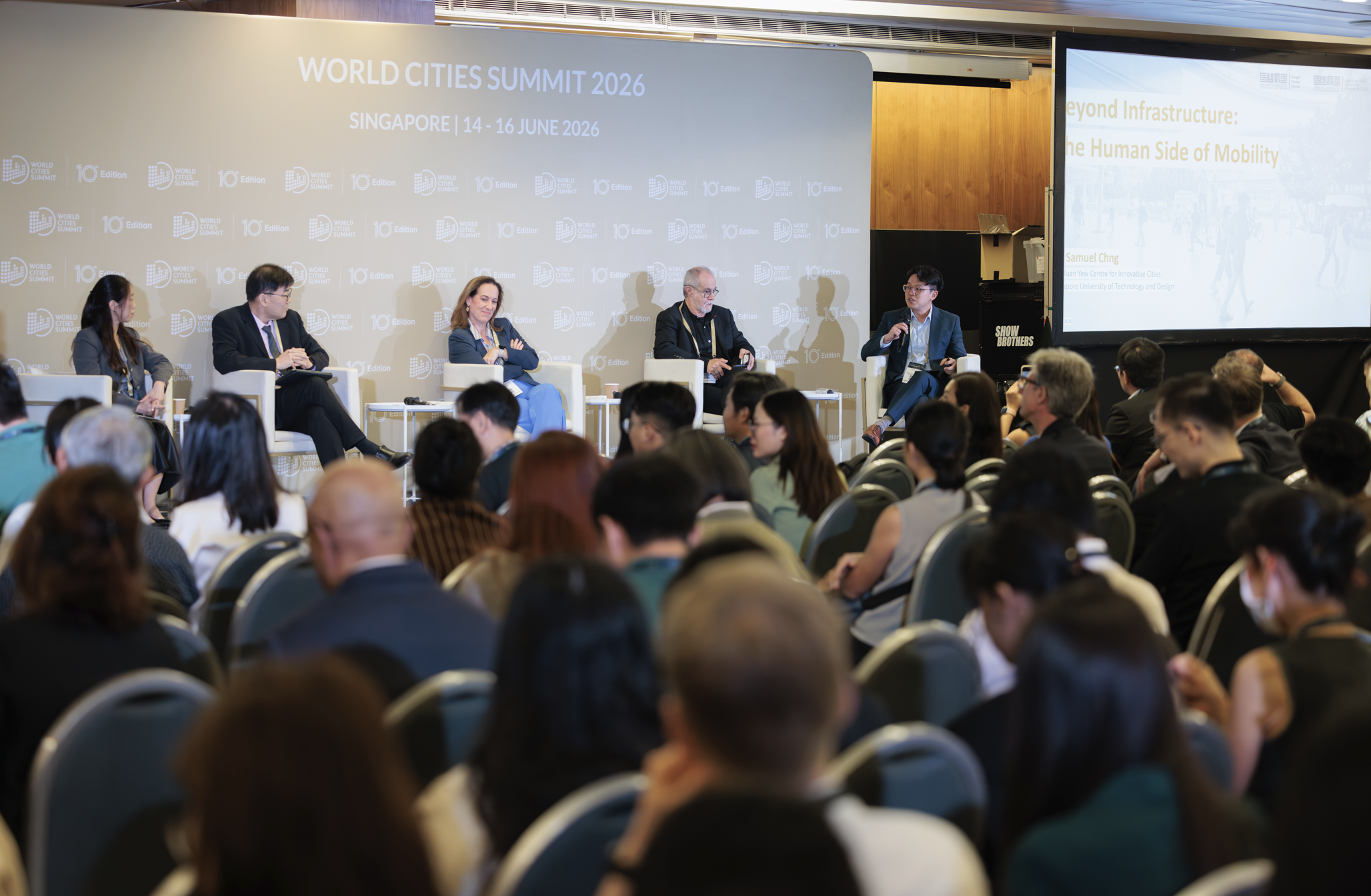
Research Assistant Professor Samuel Chng presenting LKYCIC’s research at the Future Urban Liveability: The Hyperlocal Shift session.
Beyond Sustainability: Measuring the Regenerative City
At a separate World Cities Summit session, Assistant Professor Peter Ortner from SUTD’s Architecture and Sustainable Design pillar and the Net Zero Futures Lab presented ongoing work in the ReGen Cities project undertaken in collaboration with the Centre for Liveable Cities (CLC) on defining and measuring regenerative cities.
The presentation introduced the emerging Regenerative Cities Self-Assessment Tool (RCSAT), which is being developed to help planners and policymakers assess and strengthen a city’s regenerative capacity.
Moving beyond conventional sustainability approaches, the framework explores how cities can generate positive social, environmental, and economic outcomes simultaneously. It emphasises the interconnected nature of urban systems and the importance of creating co-benefits across liveability, resilience, resource efficiency, and community wellbeing.
An international expert consensus study involving researchers and practitioners identified key regenerative principles, including reciprocity — the idea that social, ecological, and technological systems are interconnected, and that investments in one domain can generate positive outcomes across others.
By linking measurable indicators with long-term urban outcomes, the framework provides a practical and evidence-based approach to guiding cities towards more regenerative futures.


Assistant Professor Peter Ortner presenting SUTD and CLC’s work on regenerative cities at World Cities Summit 2026.
Advancing People-Centred Urban Futures
Across the three sessions, researchers highlighted the importance of understanding cities through the lens of everyday experiences, health, and regenerative outcomes. Whether examining how people move through cities, how neighbourhoods support wellbeing, or how urban systems can become regenerative, the presentations shared a common commitment to placing people at the centre of urban development.
These sessions were part of LKYCIC’s broader contribution to World Cities Summit 2026, where the Centre’s researchers and faculty participated in plenaries, panel discussions, workshops, exhibitions, and knowledge-sharing sessions on topics ranging from mobility and liveability to climate resilience, governance, and urban innovation.
Together, these contributions reflect LKYCIC’s mission to generate interdisciplinary, policy-relevant research that helps cities become more liveable, resilient, inclusive, and future-ready. By connecting insights from behavioural science, urban planning, design, and sustainability, LKYCIC continues to contribute to global conversations on how cities can better serve both people and the planet.